A leap of grace.

(This funky palm was photographed in Honduras and reminds me how much bigger God's imagination is than mine -- and that goes for the gift of humor, too.)

(This funky palm was photographed in Honduras and reminds me how much bigger God’s imagination is than mine — and that goes for the gift of humor, too.)

This month will mark the end of my first year serving as urban missioner for the Episcopal Diocese of Florida. What an incredible gift this has been. What an amazing adventure, which admittedly at times has felt like a misadventure! This has been what my dear friend and new seminary president Kurt calls “good crazy.”

It is not possible to count or recount all of the “God moments” that we have witnessed. But for you number crunchers out there, here are some high points:

  • 19,000 cups of coffee shared.
  •  560 pounds of sugar sweetened the coffee.
  •  Thousands of prayers offered.
  •  300 feet washed.
  • 1 infant welcomed into the household of God.
  •  Healings in body, mind and spirit.
  • 1 deacon officially assigned (the amazing Deacon Joe) and another informally acquired (Deacon Jerry) thanks to our faithful Lutheran brethren.

I would be remiss if I did not say this: Thank you, Bishop Samuel Johnson Howard, not only for allowing this “experiment” to proceed but for your encouragement and support through prayer, public affirmation and financial assistance. It is a joy to celebrate our Sunday worship on the grassy wedge – that breezy little tree-covered oasis nestled at the edge of the diocesan parking lot – and to tell our community that our bishop is glad we are there.

This past week, one member of our community jumped and waved his arms to get my attention as I sat in traffic downtown, and, when I rolled down the window, he shouted “God loves you and so do I.” So, I do not use the term “community” lightly or in a way that is unearned. I am grateful for all the people who have shown up in one way or another. This year, for me, has not been a leap of faith; rather it has been a leap of grace. There is no way I could venture out without the grace of God freeing me from myself. There is no way this chronically financially insecure-feeling gal would have embarked on such a venture without the gift of grace keeping her control-freak-prone self sufficiently out of the way.

And there is no way this would have been possible without the gift of community – my dear close friends who surely must have wondered What is she up to now? but who have not found it necessary to voice it. And not without the gift of brave spiritual friends who said “I’m in; I want to do that!” when I mused about the possibility of an outdoor foot-washing on Maundy Thursday.

How this will continue to develop, God only knows. But what I have seen – what God has shown me from the beginning – is this: This is a ministry of presence, of making ourselves vulnerable enough to be willing to enter into relationship with others who, at first blush, may seem radically different. When we come together, we have the chance to discover what it means to become friends in the very best sense of the word. And in that process we discover the Living Word dwelling among us, making all things possible.

Posted in Diocese of Florida, faith, Grace, Interfaith, Ministry, Uncategorized, unity | Tagged , , , , , , , , , , | Leave a comment

To begin again.

(photo taken in the backyard with an iPhone)

(photo taken in the backyard with an iPhone)

In my back yard, there are four sago palms that the previous owner for some reason planted together in a very tight space. Periodically the heavy fronds must be cut back at the base. It is not possible to do this without getting stuck a few times. What amazes me is what is found underneath the heavy, dark leaves, planks of palm that are so dense and angry-looking they are sure to smother whatever happens to be in their way.

Underneath the heavy lethargic growth are light green stalks, curled into themselves as they patiently wait for the way to be made clear. Just two or three days after the old growth is cut away, they shoot straight up, these tightly wrapped fuzzy green stalks. And then, a day or two later, they begin to unfurl. I have never noticed what an amazing dance this is. For the first time, I was able to see these perfect, curly-cues of new life unwrap their fingers and reach tentatively into space.

Apparently, I needed to see this, this year. To know that underneath the tired heavy fronds of my Self, there is new life patiently waiting for the opportunity to burst forth. I need only become willing to let go of the familiar, long-held way of being and doing.

Earlier today, as part of a weekly centering prayer group at a local shelter, we read a brief excerpt from John Main. I do not have the book with me now but the gist of the reading was this: our greatest gift is the reality that we are designed to begin again. Each time we turn to notice a new thing in the midst of the familiar or the routine, each time we think God or help or thanks, we begin again. This dance of life is a dance that is meant to be repeated, to show forth God’s glory again and again.

Some complain that the liturgies of the Episcopal Church — our practices in worship — are repetitive or redundant. But if we come with open minds and hearts, acknowledging our hunger and thirst, then we have the chance to experience and participate in something new, something fresh, something life-giving that frees us to begin again.

Posted in Episcopal church, faith, Grace, Recovery, Uncategorized | Tagged , , , , , , , , , | Leave a comment

By the oaks.

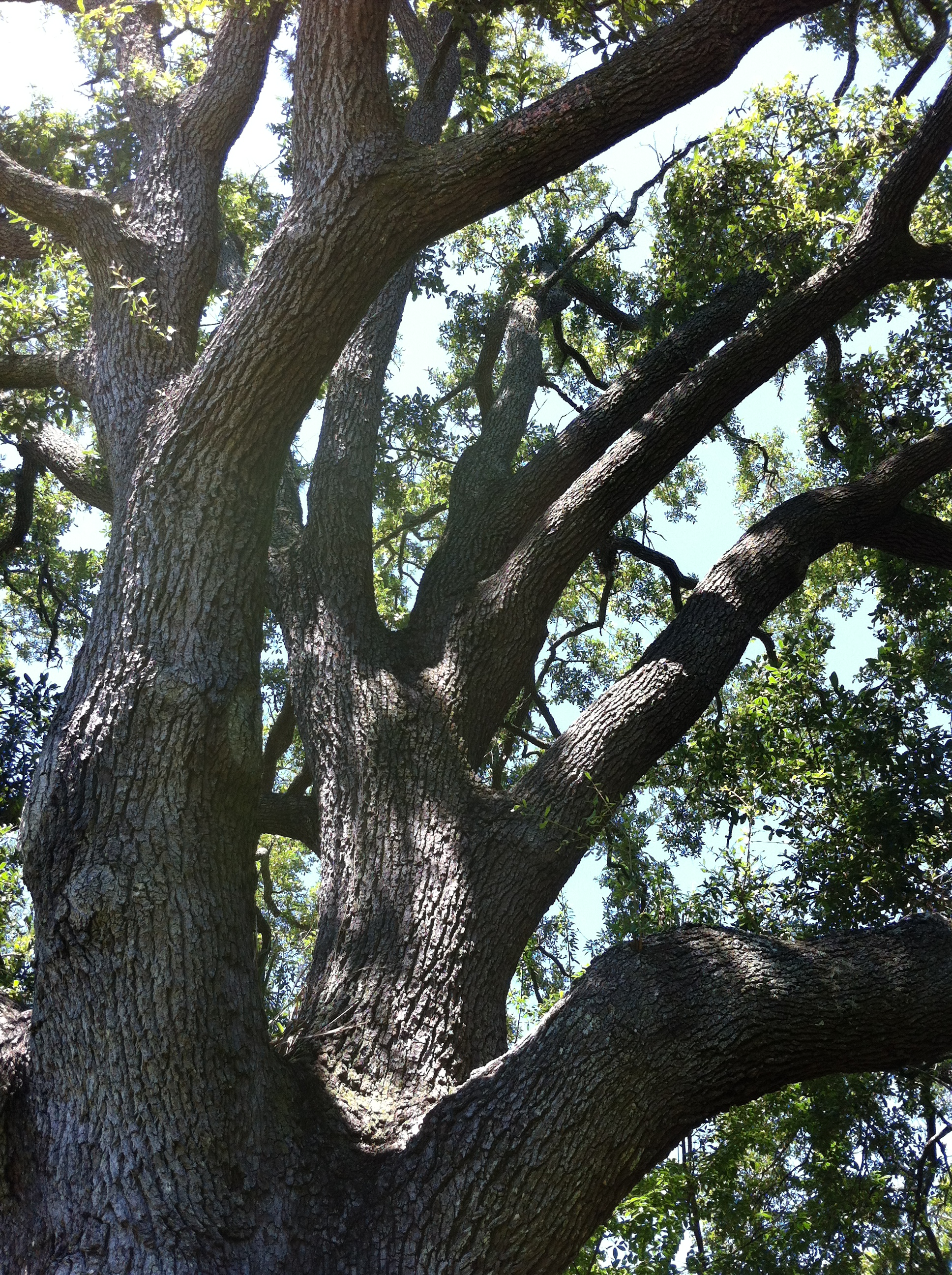
(Photo of a fine specimen of a live oak, in the front yard.)

(Photo of a fine specimen of a live oak, in the front yard.)

The LORD appeared to Abraham by the oaks of Mamre, as he sat at the entrance of his tent in the heat of the day. He looked up and saw three men standing near him. When he saw them, he ran from the tent entrance to meet them, and bowed down to the ground. He said, ‘My lord, if I find favour with you, do not pass by your servant. Let a little water be brought, and wash your feet, and rest yourselves under the tree. Let me bring a little bread, that you may refresh yourselves, and after that you may pass on—since you have come to your servant.’ So they said, ‘Do as you have said.’ (Genesis 18:1-5)

This morning I went into the front yard to water a few flowers, only to be met by a distracting cacophony. Several squirrels had situated themselves on the branches of the enormous oak tree that dwarfs my little cottage home. They were squawking at each other like nobody’s business. What a beautiful thing, to be held high and protected by such enormous branches even in the midst of their disturbance. It made me think of the gentle, constant presence of God in my life, even when I am fixated on some concern or another, tempted to lose myself in the drama du jour.

As I work now in my office, the broad long branches of this oak shield my home, even as they reach up and outward toward my neighbors. In this regard, they are more consistently neighborly than am I. The oak or the terebinth was considered sacred by many – a place where God might be encountered.

The Lord appeared to Abraham by the oaks of Mamre. Abraham saw three men there and bowed down to them. Many say that this alludes to the Trinity, though most scholars suggest it refers to the Lord who is accompanied by two angels. I have no interest in entering a debate. What matters is that God comes to us. Even today God comes to us; this is the reality that interests me greatly.

Tomorrow our “church without walls” will gather once again in our shady patch at the edge of a downtown parking lot. Our spot is situated along a several-block corridor formed between tall buildings, so that a breeze most always is produced. There is a scientific explanation for this but I also know that the Holy Spirit is with us.

As we celebrate Trinity Sunday tomorrow, we will welcome the persons of God. We will offer our own halting hospitality. We will offer ourselves, our stories and our hearts. We will bless the bread and the fruit of the vine. We will share Holy Communion and a picnic lunch, as we give thanks that God is surely taking rest with us under the trees.

Posted in Christianity, congregational development, faith, Grace, peace, Uncategorized, unity | Tagged , , , , , , , , , , , , | 2 Comments

Be courageous.

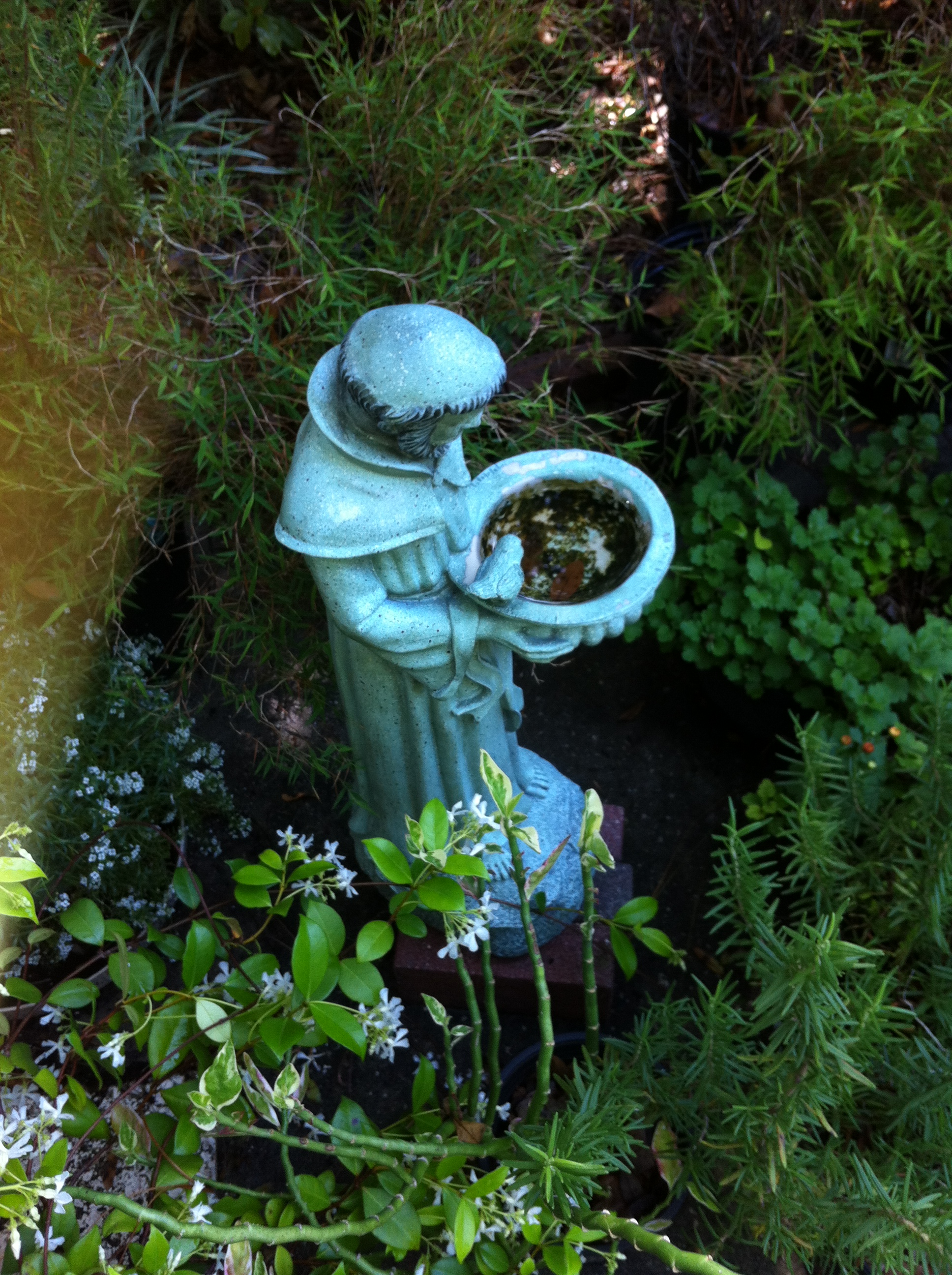
(Photo taken in the backyard garden I share with my neighbor Paul.)

(Photo taken in the back yard.)

Be gentle.
Be truthful.
Be courageous.

-Gandhi (by way of my friend Walter)

Note: A “Google” search for this quote shows it most commonly written as “Be truthful, gentle and fearless.” However, Walter’s rendering (and his timing in sharing it) resonated deeply with me, so this is what I’m sticking with. This is last in a series of blog entries based on each line.

Of all three admonitions, be courageous is the one I resist the most. At present, when I hear and ponder it, it sounds foreign and strange. But then, lately, not much about my life feels certain. Perhaps I am just becoming more conscious of the reality that I am in control of precious little (unsettling news for even a minor control freak!).

This growing awareness is what drives me to rely on God. Recently I reread a piece put out by the Third Order Franciscans that notes that St. Francis found strength in realizing how weak he was, how completely dependent on God. This idea is shared by various 12 Step communities who know that recovery begins when a person is able to recognize and admit their utter powerlessness.

Most recently, I have had the privilege of watching my dear friend Caroline receive a cancer diagnosis with incredible openness and grace. Through example, she will teach those around her a great deal as she walks through the coming months, with her characteristic commitment to honesty and conscious living.

Maybe the reason I prefer my friend Walter’s version of this Gandhi quote over the more common rendering is because of this final line, “Be courageous.” It offers greater possibility for me than the line Be fearless. In the words of Mark Twain “Courage is not the absence of fear. It is acting in spite of it.” This ministry to which I have been called – this “church without walls” – is as enlivening as it is frightening. A highly respected colleague, with whom I have not yet had a chance to become personally acquainted, told me at a recent clergy gathering: “You have cajones!” I must make a point of getting to know this colleague better.

Courage comes from the Latin to mean heart. The work of the heart is more solid and grounded than pure emotion. It may utilize the gifts of logic and reason but it is not constrained by them. Fearlessness I may never know. But courage — courage is available to us all.

Be strong and let your heart take courage, all you who wait for the Lord. (Ps 31:24)

Posted in Uncategorized | 4 Comments

Be truthful.

(Photo taken at Caesarea Maritima.)

(Photo taken at Caesarea Maritima.)

Be gentle.
Be truthful.
Be courageous.

-Gandhi (by way of my friend Walter)

Note: A “Google” search for this quote shows it most commonly written as “Be truthful, gentle and fearless.” However, Walter’s rendering (and his timing in sharing it) resonated deeply with me, so this is what I’m sticking with. This is the second in a series of blog entries based on each line.

Be truthful. Some levels of honesty come more easily for me than others. “Cash register” honesty for instance. Or saying what I like or dislike, so long as there is no risk that it will offend others.

Other levels of honesty get tricky for me. Not because the “news” is earth-shattering or difficult in and of itself, but because I don’t want to disappoint someone. I remember reviewing a written moral inventory with one of my 12-step mentors. I sheepishly confessed: “I am a people-pleaser.” She considered this for a moment (I had provided some specific examples from my life as evidence thereof), then she replied: “Calling yourself a people-pleaser simply dresses up the truth: it would be more accurate to say that you are a liar.”

Ouch.

Her comment shook me up for an instant but it was a welcome shakeup. I knew in my gut that she was speaking the truth. Her brutally direct assessment healed me while my own self-assessment felt like treading water; at best — it got me nowhere.

I have a disorder of the ego. My human tendency is to look to others for love and approval. My people-pleasing — my unwillingness at times to speak my truth — comes from a place of fear at losing your love and approval. When I operate from this inauthentic space, it taints whatever love you may offer. This comes from forgetting the constant Source of Love that is always sufficient.

This kind of truth-telling has nothing to do with making others wrong. It is not hard to recognize when I am in such a space; if I find myself tempted to recruit others to my view, if I find myself looking for folks to affirm and agree with my “position,” I am in trouble. I am not just treading water, I am flailing about in the quicksand of “my story.” If that is where I am coming from, I haven’t completed the work I need to do; I am not trusting God to be my companion and my source.

To get to that place of being both gentle and truthful, I need to be willing to tell a story that is simply about me and what God seems to be willing in and through me. Another’s story is not my business; it is that person’s story to tell.

Living in community — in unity with others — includes a willingness to be vulnerable, to share my story, and to allow others the chance to respond as they will. Their response is not my business.

This kind of vulnerability comes through grace, the same grace that is present in all the glorious messiness of life. If we each do our little part, striving toward a personal authenticity that respects the other, that same Grace will make sense of it all, in due time.

Posted in 12-step spirituality, Christianity, faith, Grace, peace, Recovery, Uncategorized, unity | Tagged , , , , , , , , , , | 4 Comments

Be gentle.

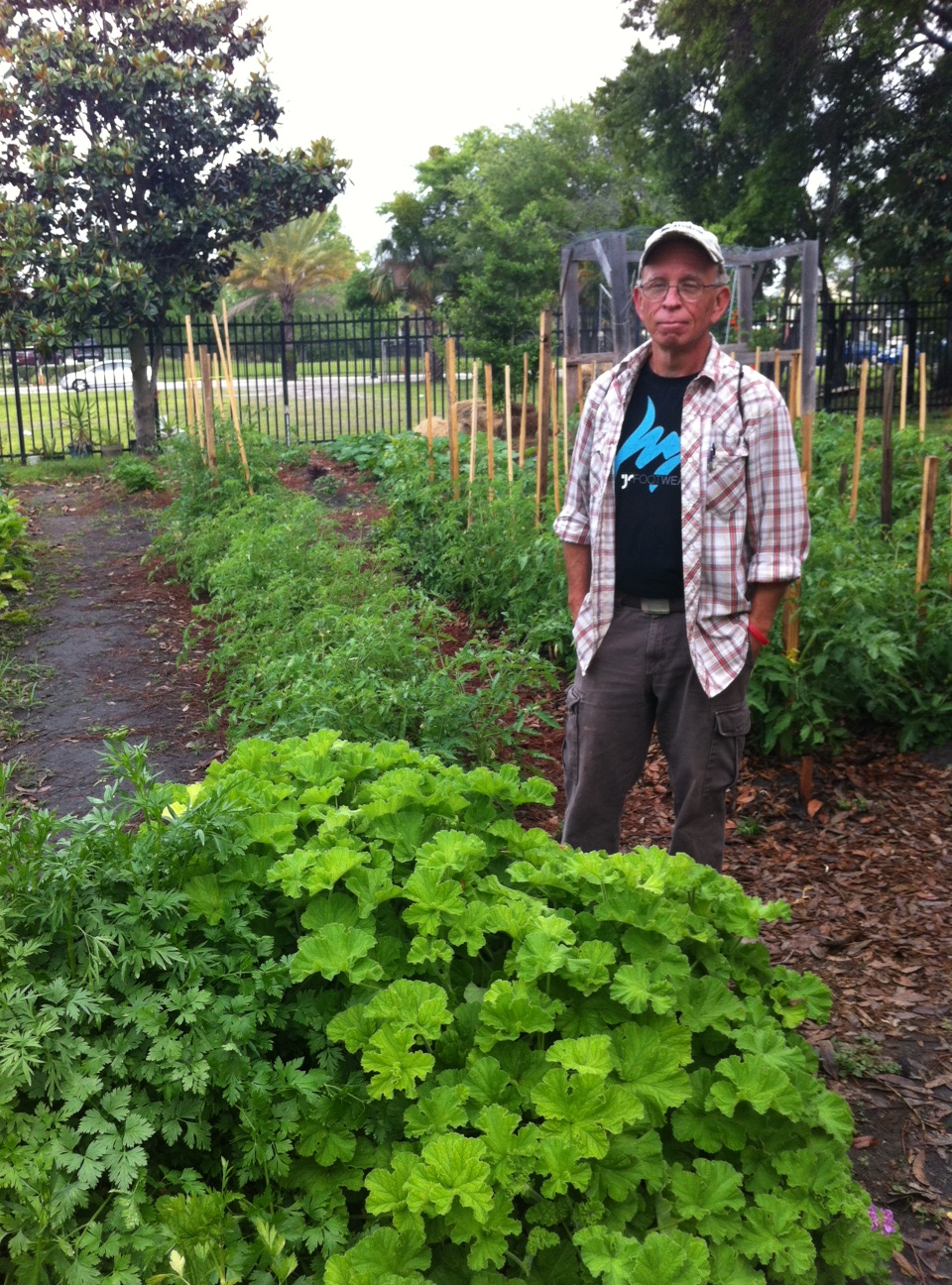
(Photo taken of my friend Don gently tending the "garden of hope.")

(Photo taken of my friend Don gently tending the “garden of hope.”)

Be gentle.
Be truthful.
Be courageous.

-Gandhi (by way of my friend Walter)

Note: A “Google” search for this quote shows it most commonly written as “Be truthful, gentle and fearless.” However, Walter’s rendering (and his timing in sharing it) resonated deeply with me, so this is what I’m sticking with. Each line will be the basis of its own blog entry.

Be gentle. These are soothing words that speak to me in these joy-filled, busy and ever changing times. In the midst of a health scare earlier this year that, thankfully, turned out to be nothing of concern, I promised God (and some concerned friends) that I would slow down a bit and be more intentional about what I take on and about making time and space for “self care.” Allowing myself to go to bed early or sneak in a nap here and there, and being faithful about meditation and exercise all fall under the category of being gentle. Being forgiving of self and treating myself with a bit of compassion rather than blame or shame or the “shoulda-woulda-couldas” also is a way of practicing gentleness.

When I am gentle with myself, it becomes easier to be gentle with my neighbor. To listen attentively and to appreciate another’s pain comes more easily when I am allowing space for my own spiritual and emotional processes to unfold and breathe. This journey of growth – of moving more deeply into relationship with self and with God – takes time. As some of my 12-step friends are fond of saying: ”It takes as long as it takes.”

This call to be gentle took on special meaning this Wednesday morning, as I watched my friend Don tend the “garden of hope” at a local mission. Over these past 6 months, I have watched Don move slowly and purposely through the garden, examining some leaves and new growth here and there, and occasionally harvesting fresh vegetables for the mission kitchen. He has such a peace about him as he moves quietly, lovingly among the rows.

One morning late last year, I noticed several stalks of asparagus that Don had harvested. “It takes 3 years to produce a crop of asparagus,” he told me. It struck me how patient and gentle the gardener must be in order to allow his garden to bear food that will nourish. When I was in second grade, we planted orange seeds in small milk cartons. Each morning I could not resist digging up my seed to check progress. I did not know how to let it be.

I have grown a lot since then. Waiting for asparagus might still be a tough one for me. But in the midst of a community that practices gentleness, one with another, I can imagine it would be possible. In the midst of such gentleness, there is much reason for hope.

Posted in 12-step spirituality, Christianity, faith, peace, Recovery, Uncategorized, unity | Tagged , , , , , , , , , , , | 6 Comments

And all that is in it.

(Photo of a redbud taken in the backyard.)

(Photo of a redbud taken in the backyard.)

The earth is the Lord’s and all that is in it, the world, and those who live in it; (Psalm 24:1)

When I was a little girl, we made several road trips as a family, taking us from Jacksonville to witness the stunning beauty of the Rocky Mountains, the Grand Canyon, Big Sur and the Pacific Ocean, among other wonders, and my brother and I spent many summers exploring the North Carolina mountains with our beloved grandpa “Joe Joe.”

Later, as an adult, I was privileged to make a pilgrimage to West Africa, to take in the splendor of God’s magnificent creation. What moved me most was the vastness of the Serengeti Plain, which seemed to go on forever. Watching all manner of glorious creature stretch and dance and rest filled me with awe and wonder and the sense that it is not too late, that we haven’t yet completely destroyed the planet.

‘The earth is the Lord’s and all that is in it.’ I am struck that even as our beautiful earth is in need of healing, she continues to heal us. After the tragic bombings in Boston, and the constant barrage of media coverage and reports (that I, like many others, was drawn to again and again), I found myself grateful this morning for the gentle rain that came down as I took my time getting moving on this, my day off. I found myself drawn to the deep green and quiet of my backyard, longing to dig in the dirt and tend this small patch of paradise. We are destined to be stewards of this island home, and today, after decades of abuse to the planet, to be healers and restorers. Our journey toward personal wholeness is inextricably linked to our care of the planet.

But it is linked not only to our care of the planet, but also to our care of those who live in it (our broken selves included). Wholeness is only possible through honesty and reconciliation. It is only possible when we find ourselves in “the other,” even when the other happens to be our enemy or one who, through his or her actions, comes in our minds to represent “the enemy.” My friend Bill does amazing, holy work, bringing together victims of violent crime with those who have been locked up for committing such crimes. In the process of owning and sharing personal stories, forgiveness is sought and in time received, and compassion and mercy enter in. There are no easy answers, no tidy conclusions, but somehow a fragile hope – a hope in the possibility of new life – is born.

This week, the media coverage continues as lives lost in Boston are mourned. A spotlight is on the surviving bomber. Many commentators struggle to imagine how he could have returned to his college campus, attended classes, worked out and visited with friends. Headlines like ”Bomber partied” stir our outrage even as they shame him. Make no mistake: I am glad that he was caught (alive, thankfully) and am horrified by this terrible act. But his behavior afterwards makes a measure of sense to me. I want to imagine that he returned to campus because he, too, is shocked on some level that this tragedy occurred, and that he was capable of such acts of terror. I want to imagine that he was swept up in the emotion and fervor of an older brother who carried him along. I want to believe that he returned to class and ate spaghetti with his teammates, because he wanted everything to be “normal” again and that if he could make it seem so, then maybe all of the horror would disappear, that it would be as if it never happened.

But it did happen.

If all the earth belongs to the Lord and all the people in it, at some point we must own that we are all called to be in relationship with one another. What has shattered and come apart must at some point come together. Over the unwinding course of time – but none too soon – we will come to identify our similarities more than our differences. We will move through a slow, spiraling dance of disbelief and mourning to a place of healing and wholeness. To a place where there is no room for hate because there is only love.

We all have work to do.

Posted in Christianity, faith, Ministry, peace, Recovery, unity | Tagged , , , , , , , , , , , | Leave a comment

Spring cleaning.

(Photo taken at Marywood Retreat Center.)

(Photo taken at Marywood Retreat Center.)

“Writing is not so much building a building as it is clearing out a space.”
-C. C.

These words were spoken by a striking young woman named C.C., when I asked if any in our gathering had experience with journaling.

Our meeting was the first in a new series of “women’s spiritual journaling” workshops at a local shelter. I was graced to find myself in the presence of some incredibly beautiful and deeply spiritual women. While the eldest was in her fifties and the youngest in her early twenties, each brought incredible wisdom and discernment to our conversation. Neither allowed herself to fall into the trap of being a victim; instead there was a deep commitment to honest introspection and personal responsibility.

A friend once advised me, “You will never get to where you want to be unless you acknowledge and accept where you are now.” Those who have found recovery through 12-Step programs come to understand this in stark relief. Progress cannot be made without the admission and acceptance of one’s addiction – one’s powerlessness. Later, this same work is applied to other life challenges – as we enter into the deep work of ego-deflation-at-depth. This practice becomes a lifelong discipline of peeling away layer after layer of the onion as we move toward a true self-knowledge that comes through surrender to God.

When C.C. spoke of clearing out space, I became aware of the noise and clutter in my own life – aware of the need to do some spring cleaning. When one is in the midst of crisis over self-destructive, even life-threatening habits, it is easy to see the need for clearing things out. But sometimes we can get cluttered up with so many good things, so many interesting things, that we need to take a step back, to sit down with pen and paper and take stock. To clear out the space of one’s soul enough so that clarity returns. I had a 12-step sponsor who once told me that whenever I do a 4th step inventory of some aspect of my life that I should keep writing until I am the only character in the story (in other words, it is not my business to be in someone else’s business or worry about the” work” I think another needs to do). This is valuable advice.

Today, though, I want to write past the point where I am the only character in the story. I want to keep writing until I find God. I want to keep writing until God finds me.

Posted in 12-step spirituality, Christianity, faith, peace, Recovery, Uncategorized | Tagged , , , , , , , , , , | 4 Comments

“I am thirsty.”

(Photo taken at Trinity Episcopal Church, St. Augustine, FL.)

(Photo taken at Trinity Episcopal Church, St. Augustine, FL.)

This reflection was offered this afternoon as part of a series of reflections on The Last Seven Words of Christ at St. John’s Episcopal Cathedral, Jacksonville, FL.

After this, when Jesus knew that all was now finished,
he said (in order to fulfill the scripture), “I am thirsty.”
A jar full of sour wine was standing there.
So they put a sponge full of the wine on a branch of hyssop
and held it to his mouth.
(Jn 19:29-29)

It takes on average about 3 or 4 days
for a person to die of thirst.
This is under fairly normal conditions.
In the desert, in intense heat,
or in cases of extreme exertion
or physical duress,
it happens more quickly.
The water in your system is drawn away
from important organs — like the brain —
to replenish the blood which is ordinarily 80% water.
Your body’s vital systems begin to shut down.
You might experience a seizure or stroke
or fall into a coma.

In his captivity, Jesus has been denied
food and water.
He hangs on the cross for hours,
a staggeringly heavy cross that
he has been forced to carry
through the streets of Jerusalem.

As he hangs there, his torn and bloodied flesh
is coated with the thick dust of the road.
This sticky dust clings to his scalp.
It is in his hair, in his eyes.
It is caked along the edges of his parched, cracked lips.
This dust coats the inside of his mouth –
where it is mingled with the salt of sweat and tears,
with the metallic taste of his own blood.

“I am thirsty.”

Jesus’ willing act of submission is an act
of inextinguishable love.
It is born in the deepest desire of God for all of humankind,
for you and for me.
Jesus embraces his divine purpose,
He yields to the will of the One Holy God.
This thirsty Jesus swallows Death itself
so that we might live.

The way of Jesus is not convenient.
It is not comfortable.
If we want to follow Jesus, we must take up our cross.
But exactly how are we to enter into the experience of Jesus
as he gave himself up to be crucified?

An alcoholic who is in the grip of her illness
understands thirst in a way others find hard to imagine.
A drug-addled father — who wants nothing more than
to be a faithful, attentive spouse,
a good provider, and a strong leader —
and yet finds himself gripped by a
compulsion of body, mind and spirit
that tells him there is only one way to quell
that agonizingly relentless urge –
he too understands thirst.

Our 12 step programs tell us there is only one sure way out
of the grips of such a devastating illness:
We must come to recognize the true thirst
that resides deep within each one of us –
the human thirst that Jesus took on when
he became “God with us.”
We must enter into relationship with the Living God
who will solve our problem.

I recently read about a young woman named Chelsea
who nearly died from severe anorexia.
At her lowest point, she tipped the scales at 58 pounds.
She shared her story out of a desire to help others
who are trapped in silence and isolation as
they struggle with their own demons.
In her willingness to be vulnerable,
she offers the possibility of a way out
of a seemingly hopeless situation.

Her words of hope are credible because
they are born out of personal experience.
She says this:
“I feel like a child who was once desperately thirsty,
who was given enough water to survive and
shake her thirst, and now feels compelled to go out
and give water to anyone who is parched.”
Each time she shares her story of salvation –
Each time she sees another person respond,
Chelsea experiences immense joy and gratitude.
It is as if she is taking the first sip all over again.

We all have a deep thirst within us,
though we don’t always recognize it.
Sometimes it shows up in self-destructive behavior.
Other times it can be seen in tremendous acts of
self-forgetting generosity.
Mother Theresa reported a deep thirst for Jesus
that manifested in her life’s work, reaching out
to the sick, the poor and the forgotten.
Jesus’ thirst for suffering humanity became her thirst.

Yesterday, in the middle of the day,
the body of Christ came together
in the parking lot of St. Philip’s Church,
where we washed the feet of some 200 people
and shared fellowship and prayer with even more.

People kept coming – from the streets mostly —
but also from office buildings and
from various parish families.
I can’t say for sure why each person came,
but I like to imagine that many were drawn
by a deep thirst.

One man – Irvin – spoke with Deacon Louise.
He was not inclined to have his feet washed,
but he welcomed her prayers.
When Louise introduced us,
Irvin said that he felt that God brought him to the event,
that it was a blessing.
As we chatted, there was a hesitance in him that
he struggled to articulate.
We stood patiently with Irvin and, in time,
he admitted that he was afraid to have his feet washed —
he was afraid that his feet were too ugly.
It was clear that he was not speaking only about his feet,
but about his entire being.
He was afraid he would be rejected once again.

Eventually Irvin sat down and removed his shoes.
He announced that he would have his feet washed if
Louise would stay beside him.
As his feet were soothed and caressed,
you could almost see the layers of fear and
self-protection fall away.
Quiet tears streamed down his face as
he was healed on a deep level.

I believe that healing was possible
because Irvin was willing to be vulnerable,
to give voice to his deep thirst for connection and
to acknowledge his fear of being rejected.
Jesus enters into our vulnerability.
He swallows the fear and death within us,
taking it on to transform it into something beautiful.
He responds to our deepest thirst and sends us out
to offer water to anyone who is parched.

Those who came to help wash feet and
offer hospitality and healing prayer
were driven by another form of thirst.
They experienced Jesus’ thirst for us –
a thirst that manifests in a desire to follow His example.

This thirst is revealed in a willingness to practice
a different kind of vulnerability for Jesus’ sake.
A vulnerability born out of gratitude
for what he has done for us.

There have been many times when
I have been troubled by the presence of
a nagging, spiritual thirst.
It is easy to mistake this for the absence of God.
If it persists, it is not much a stretch to imagine
that God has abandoned or forsaken us.

But I have come to believe that
our sense of thirst is a spiritual grace.
Our unquenchable longing for God is
a reflection of his constant longing for us.
We can be united to Christ in his resurrection
only if we are willing to share in his suffering.

There is one sure way to encounter
Jesus who is the Water of Life:
offer a drink to another parched soul.
Amen.

Posted in 12-step spirituality, Christianity, Diocese of Florida, faith, Ministry, peace, Recovery, Uncategorized | Tagged , , , , , , , , , , , , | 2 Comments

Washed with love.

(This photo was taken for us by Mary Hamilton.)

(This photo was taken for us by Mary Hamilton.)

This reflection is from guest blogger Louise Hardman. Louise had written this for no other purpose than to share it with me, but I convinced her to let me share it with you. Thank you, Louise!

Maundy Thursday. Late morning at St. Philip’s. With street people, mostly. Being washed, these folks unaccustomed to being served, waited on, perhaps even noticed at all. Reluctant to participate at first but loving “washers” slowly gathered them in.

Others, like myself, brought coffee to them: we the servant not them. Unaccustomed to being touched, to simply being loved. It was a profound experience for some, like a dear man I will call “Joe.” Since I couldn’t bend to wash because of a back brace and he didn’t want to be washed, I asked if I could pray with him. He immediately responded. “Oh yes,” he said, “and pray for healing in my heart for my sister. We used to be close but there was the time she refused to take me in.” He mumbled something about drugs. His closest family, she had turned him down, out. He felt anger at her, and resentment. But he didn’t like feeling that way. “And I can’t forgive her. It is a heavy weight on my heart.” So we prayed, prayed that God would ease the turmoil in his heart, perhaps even help them to love again.

I learned that he was a pro football player. With the San Diego Chargers. And that he wanted to learn to play the guitar. How fortuitous, then, that when he re-considered and agreed to have his feet washed, it was a dear sister with compassion in particular for the down and out who was his washer. And that she gave guitar lessons. And that “Joe” knew someone in her church!

And so he sat on that metal chair in the parking lot, tears streaming down his face. I told him I’d stay with him and so I did, with another woman also touched by his tears. He said he’d never had someone wash his feet nor rub them with lotion before putting a pair if brand new socks on his now-cleansed feet.

I left “Joe” and his washer talking about guitar lessons and how they could be in touch.

“Joe” was Loved there in the parking lot at St. Philip’s. I myself was blessed. It all seemed the way of Jesus washing the dusty, road traveled feet of His disciples. A foot washing as Jesus would have had it.

— written by the Rev. Deacon Louise Hardman

Posted in Christianity, Diocese of Florida, Episcopal church, Ministry, peace, Recovery, Uncategorized, unity | Tagged , , , , , , , , , , , , , | Leave a comment