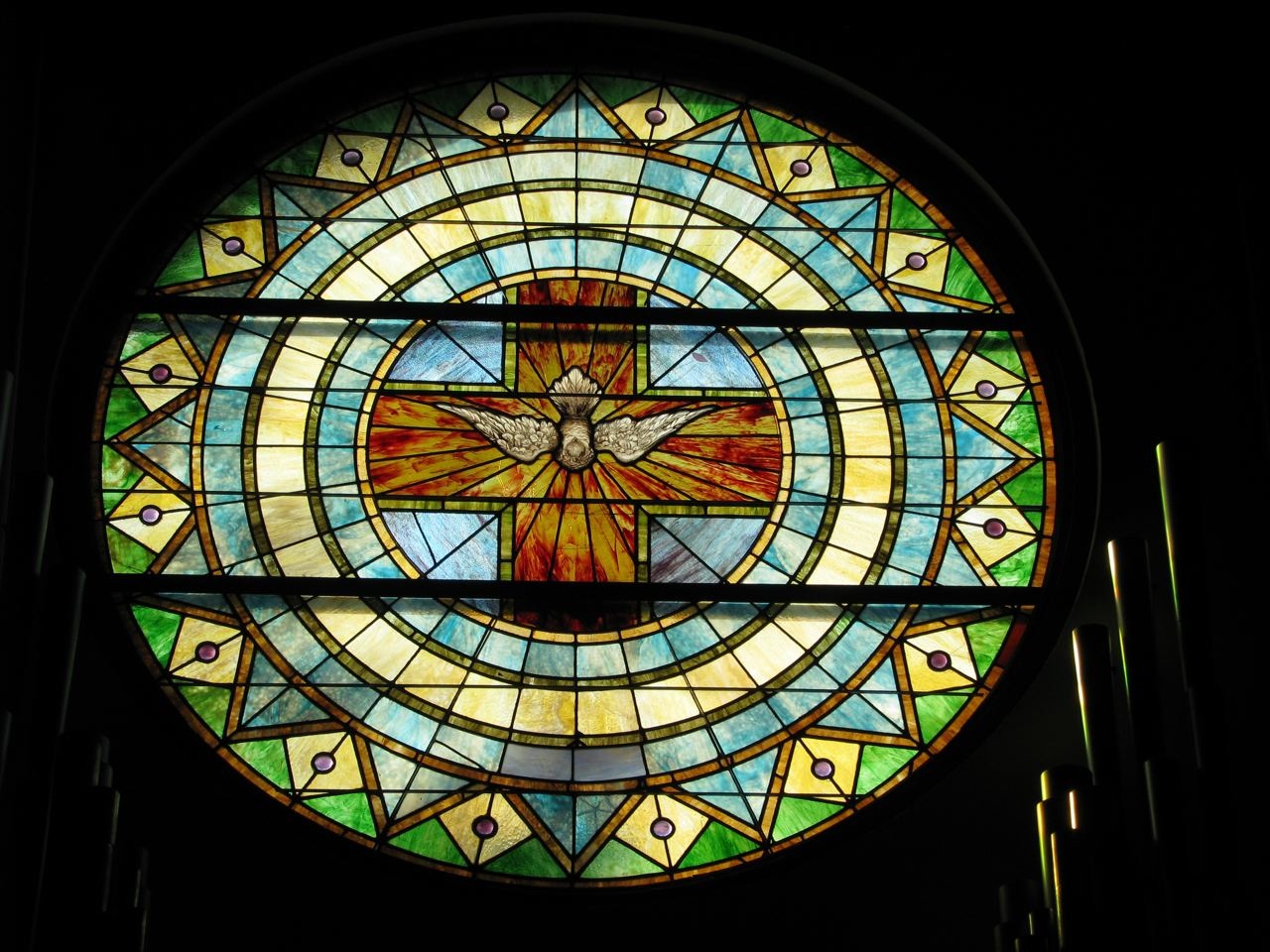
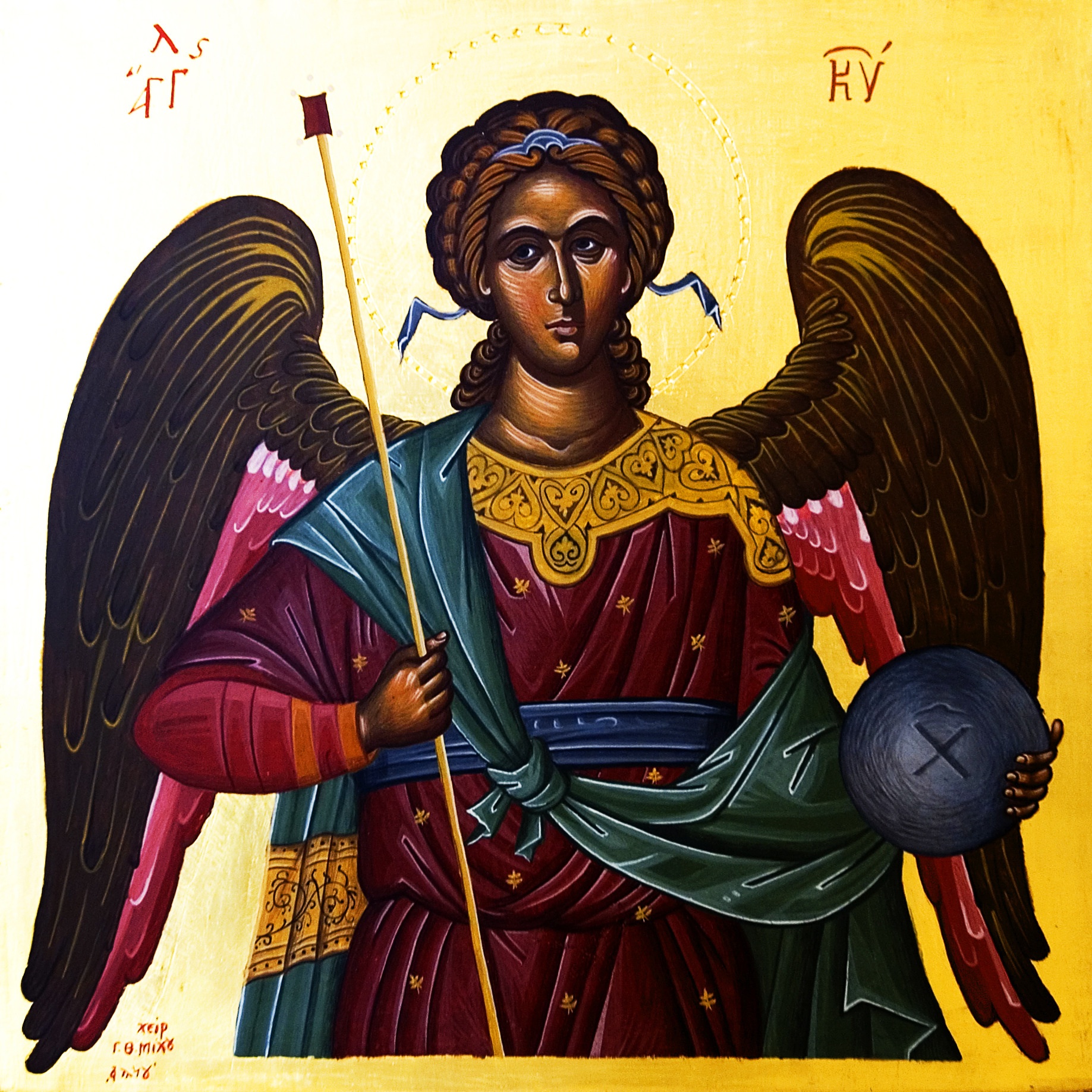
Calling them all by name.

(Photo taken by Mtr. Beth Tjoflat at glass factory in Hebron, Israel)

(Photo taken by Mtr. Beth Tjoflat at glass factory in Hebron, Israel)

Lift up your eyes on high and see: Who created these? He who brings out their host and numbers them, calling them all by name; because he is great in strength, mighty in power, not one is missing. (Isaiah 40:26)

(The following reflection is provided by guest blogger Deacon Joe Mazza.)

As I do almost every Saturday morning, I went to a local food pantry to offer prayer and to help out any way I can.  As many as thirty folks are always standing in line to receive bags of groceries.  I always pray with the group — for their needs, their health, and that they can give their cares to our Lord — and I ask a blessing for the food they are about to receive.

This morning’s prayer was quite different.

Like most of the country, my thoughts and prayers have been with the victims and families of the unimaginable events in Newtown, Connecticut, and after the words of prayers for the folks in front of me, I shared prayers for the victims and families of victims, and it came to me that we know very well the name of the shooter, but not the names of the twenty children and six adults who were killed.  It seems that with any tragic mass killing, we hear over and over and remember very well the name of the individual with the gun, but soon forget the names of the victims, if we remember them at all.

I shared with the folks in line and the volunteers doing God’s work that as soon as the victims’ names are made public, I intend to copy them down and pray for them by calling each one by their name, and trying my best to remember them.

When I said this, over half of the folks, folks living in poverty, said they hadn’t thought of that and wanted to do the same.  The Lord will hear the prayers of those in need as clearly as He will hear all our prayers.

I pray now for each person killed, trying my best to commit to memory their names as well as I know the name of the individual responsible for their deaths. Please join me in praying for:

Charlotte, 6 years old

Daniel, 7 years old

Rachel, 29 years old, staff member

Olivia, 6 years old

Josephine, 7 years old

Ana, 6 years old

Dylan, 6 years old

Dawn, 47 years old, principal

Madeleine, 6 years old

Catherine, 6 years old

Chase, 7 years old

Nancy, 52 years old, mother of shooter

Jesse, 6 years old

James, 6 years old

Grace, 7 years old

Anne Marie, 52 years old, staff member

Emile, 6 years old

Jack, 6 years old

Noah, 6 years old

Caroline, 6 years old

Jessica, 6 years old

Avielle, 6 years old

Lauren, 30 years old, staff member

Mary, 56 years old, staff member

Victoria, 27 years old staff member

Benjamin, 6 years old

Allison, 6 years old

For me it’s not about details heard over and over on television outlets needing to fill time. When we know the names and see the faces of the children and adults killed, the other details mean nothing.  We will more easily remember God’s children with names and faces.

My heart and prayers go to the families who will soon have to face Christmas gifts and no child to give them to.

Prayer is the least I can do.

Deacon Joe Mazza
Church Without Walls, Jacksonville
http://www.facebook.com/churchwithotwalls.Jacksonville.FL

Posted in Christianity, Diocese of Florida, Episcopal church, faith, Ministry, Uncategorized | Tagged , , , , , , , , | 3 Comments

In our midst.

Do not fear, O Zion;

            do not let your hands grow weak.

The LORD, your God, is in your midst,

            a warrior who gives victory;

he will rejoice over you with gladness,

            he will renew you in his love;

he will exult over you with loud singing

            as on a day of festival. (Zephaniah 3:16-18a)

Sharing gifts: a new friend, Maurice, brought fresh grapefruit and oranges.

Sharing gifts: a new friend, Maurice, brought fresh grapefruit and oranges.

This Advent season, even as we wait in darkness, even as we prepare for Christ to be born in our hearts anew, there are signs that already He has come.  In the midst of great trials – in our midst, even – green leaves spring forth on the fig tree and unfurl before our very eyes, to declare that the kingdom of God is near.

Lately I have been confiding in those closest to me that Wednesday has become my favorite day of the week.  Our “church without walls” coffee fellowship at a local shelter has become a huge blessing for me and, I hope, for many others.  We gather early in the morning to brew more than 400 cups of coffee and visit with volunteers, residents and those hovering on the edges.  Usually we have an opening prayer and then begin serving, but this morning we started nearly an hour early as the folks who were lined up around the block were invited in early, to gather under an outdoor shelter as the rain came down steadily.

There were stories of heartache, frustration, conflict and lost hope. And there were stories of sobriety, new housing, and the chance to go to school.

It is amazing to me how quickly a community has sprung up among us – a community of folks, from a wide variety of places and life experiences, who manage to find common ground.  The thing about being in crisis or facing a frightening transition is that it becomes difficult, if not downright impossible, to hide behind a façade.  When you lose most or all of the worldly goods that make you feel safe and cushioned, you no longer have much of anything to protect.

We are a motley crew of the addicted and the recovering, the devoutly Christian and the skeptical, those seeking a sense of home and those merely passing through.  In those shared moments, over coffee and conversation and prayer, we are brother and sister, we are true kin.  For a couple of hours, we inhabit a bit of holy ground on this beautiful earth, our island home.  We are part of the family of God, and we find He is with us even in our waiting.

Jesus is in our midst.

Posted in 12-step spirituality, Christianity, congregational development, Diocese of Florida, Episcopal church, faith, Ministry, peace, Recovery, unity | Tagged , , , , , , , , , , , , | Leave a comment

With power and great glory.

(photo taken at chapel in Ein Kerem, where Mary visited Elizabeth. See Luke 1:39-56.)

(photo taken at chapel in Ein Kerem, where Mary visited Elizabeth. See Luke 1:39-56.)

God has always been coming.  He came in the creation of light, and he came yet more in Adam.  He came in Abraham but was to come more fully in Moses.  He came in Elijah, but was to come even more fully in Jesus.  The God who comes takes part in the procession of time. With history He localizes Himself in the geography of the cosmos, in the consciousness of man, and in the Person of Christ.  He has come and has yet to come.

— Carlo Carretto

This beautiful image of Mary moved me deeply when I encountered it in Israel last summer.  It came to mind this week as I struggled to find unity between the apocalyptic image of “the Son of Man coming in a cloud” from last Sunday’s Gospel (Luke 21:25-36) and images of baby Jesus, lying in a manger.  It is this latter image that is more familiar, that permeates our secular culture almost as much as it does our churches.  I know that during this Advent season, and Christmas as well, I will walk into many homes (including my own) that incorporate a crèche or Nativity scene as part of holiday decorating.  I do not expect to encounter a display of the Son of Man Coming on a cloud, with scenes of earthquakes, roaring seas and distressed nations as a backdrop.

That is as it should be. Or at least that is what I am accustomed to and what I plan to stick with.  But, still, I keep thinking about the Cosmic Christ that we met last week in Luke, the One who comes with such great power and glory that nothing is the same.  All we might depend on for security or comfort or escape is upended.  God is ushering in a new creation and we are invited to wake up and be a part of it.  As people of God our Advent time of waiting is not a passive waiting.

Sometimes when God comes, we are taken by surprise.  Time and again, when the Holy Spirit presents me with the unexpected, I find myself exclaiming: Christ is alive?! Oh, my — Christ IS alive!

Of late, I am finding Jesus on the street, in the people of the street.  In the midst of great suffering, he comes in the faces and voices of the least of these who long to bless and love others as much as to be blessed.  I find him also in the “people in the pews” and over coffee, when friends see Christ anew and, in response, seek to connect with all of creation, even with those who are different, who are on the fringes.

The image of baby Jesus is one I love. It speaks to me of great hope and assurance.  It reminds me to wait for something new, something redeeming, something marked by deep hope and promise.

If we look beyond the sometimes schmaltzy images of baby Jesus, we will find something cataclysmic and staggering in its power.  We will find Love that is so vast it can generate a universe in a word. It places stars in the sky, and it gives each one of us breath.  It is far greater than anything we could ask or imagine.

He has come and is yet to come.

Posted in Christianity, faith, peace, Recovery, Uncategorized, unity | Tagged , , , , , , , , , | Leave a comment

Without walls.

Below is a sermon I was privileged to share at St. John’s Cathedral, Jacksonville, FL, on Thanksgiving Day.  I share it here because it helps describe and capture the spirit of new urban ministry as we strive to “build a church without walls.”  Thanks be to God for the opportunity to attempt, though limited in scope and vision, to do his will. To love God and neighbor. To welcome all.

Joel 2:21-27; Ps 126; 1 Timothy 2:1-7; Matthew 6:25-33

May only your word be spoken here, O Lord.

May only your word be heard.

In the name of God, Father, Son and Holy Spirit. Amen.

Later on today each of us will likely enjoy

some kind of wonderful meal.

We will sit down and break bread with family or friends,

and relax and enjoy the fruit of God’s abundance.

Themes of food and hospitality run

throughout holy scripture.

My mother’s first denomination – the Moravian Church –

regularly celebrates a Love Feast—

the usual order of worship is interrupted as

people enter the sanctuary with baskets of  warm rolls

and trays full of mugs of coffee with cream.

Everyone partakes in this shared meal, which

in its simplicity is holy and life-giving.

Food is important.

Jesus thinks so.

When he walked among us, he frequently

invited himself to supper!

One blogger described Jesus’ earthly ministry this way:

“Jesus shared lots of dinners with bad people.”

Jesus’ practice of seeking out liars,

cheats, prostitutes, and thieves —

His practicing of loving and fellowshipping

With folks just as they are –

just where they find themselves –

flies in the face of the theology

most prevalent in our culture.

It flies in the face of the idea that those of us

who are incredibly blessed must somehow

have God’s favor in a way that others do not.

We must be living right.

We must be doing something to deserve this favor.

And, of course, what comes along with that thinking

is the idea that folks who are struggling.

who are down and out,

who are losing their jobs or are upside down

in their homes if they still have one –

these folks must somehow be doing something wrong.

This theology is so pervasive that most folks don’t

think consciously about it.

There is nothing wrong with prospering and doing well.

But we make a mistake when we draw a

direct correlation between worldly success and

the unmerited gift that is Jesus Christ.

Over and over, we get sucked back into “works righteousness,”

this idea that we earn our blessings —

we earn our salvation, even —

rather than the truth that we all sin and fall short.

The good news is the incredible mercy and generosity

of Christ who poured himself out for all.

For ALL.

Imagine this:

Imagine living a life defined by chronic instability.

Imagine being a teenager, who has grown up in

a volatile environment.

Maybe dad walked out.

Or your parents struggle to find work.

Imagine going without food some days.

Sleeping at grandma’s one week,

then at an aunt’s the next and

on a friend’s couch another, and so on.

Imagine trying to do school work while

constantly worrying about wearing out

the welcome of family or friends.

And then imagine hearing today’s gospel.

Don’t worry about what to wear or what you’ll eat.

            God has your back.

Wouldn’t it be easy under those circumstances –

to conclude that God had somehow abandoned you?

The text from Matthew is beautiful and poetic,

but it needs the balance of First Timothy,

which urges us to pray for everyone, but in particular

for those in high places, with power and influence.

Why single them out?

Because they are in a position to help us move

toward a more just society.

I want to tell you a little about this concept

of a “church without walls.”

It is a call for the Body of Christ to go out

into the world where the people are.

First and foremost, it is a ministry of presence.

It is something akin to Jesus inviting himself

to dinner in the most unlikely places.

Alcoholics Anonymous and other 12 step programs

model this radical hospitality well

when they describe themselves as a society of

people who ordinarily would not mix.

This “church without walls” is not just about

ministry with street folks or people in shelters.

It is attracting some, who are regular church goers but

who are looking to engage with a world of hurt,

to find a way of living out their faith that

feels urgent and real.

Others are among the fastest growing segment in our culture:

those who identify as “spiritual but not religious.”

Many struggle to see the relevance of what

we do within the parish walls.

Some of these folks are being drawn to

a “church without walls” and

some who come will eventually find their way

to our “churches with walls.”

One of the things I’ve been doing is to walk around and

talk to people: on the street, in parks,

wherever daily life happens.

Anyone who is curious has an open invitation

to come with me.

So far, all takers have been folks

who are completely unchurched.

But they are hungry for authentic connection

and meaning.

Next month we hope to launch regular outdoor worship.

One of our parish youth groups is among those

who have expressed an interest, not just in helping , one-off —

but in forming meaningful community.

Jesus calls us to come together with those who are like us and

with those who may seem quite different.

When we take the risk to move out of our comfort zone,

we place ourselves in a position to be transformed by God.

Let me tell you a little story about how

the Holy Spirit is creating community.

Just 6 weeks ago we started offering coffee fellowship

and Morning Prayer on Wednesdays at Clara White Mission.

We serve around 400 cups of coffee to more than

300 folks who are lined up outside.

Around 9:30, a group of us gathers in a small circle

to reflect on scripture and to pray.

We are beginning to know folks — and to be known.

Yesterday morning, as I was setting up outside,

a man called me over, by name.

“I need to talk to you, Mother Beth.

I need to tell you what’s going on with James.”

He proceeded to tell me about how one of

our regulars, had reinjured his hand but

would not go to the hospital.

This man and his friends were worried.

“I know James confides in you,” he said, “so maybe you can help.”

Later when I saw James and spoke with him about

his friends’ concern, he was blown away.

“Really, somebody came to you about this?” he asked.

“Wow, they really care about me.”

I told him he has some good friends.

Can you believe what has developed quite organically

in our little community in just 6 weeks?

The most fundamental things we all long for:

community, connection, meaning, hope –

these are springing up.

Jesus tells us:

Strive first for the kingdom of God and his righteousness.

Strive for a just, merciful society where

all people are valued and included.

When we shut out those who are different,

when we shun those who make us feel uncomfortable,

we are saying “no” to the kingdom of God.

We all do this.

It’s a symptom of our flawed humanity.

We need not try to force ourselves to move

from our protective “no” straight to an open and vulnerable “yes”,

If we are willing to open the door just a crack,

we make way for the Grace of God to gently bring us

from “no” toward the possibility of “maybe.”

Just maybe.

And that, my friends, is enough to begin.

Amen.

(For updates on this ministry, go to http://www.facebook.com/churchwithoutwalls.Jacksonville.FL and click the “like” button at the top of the page.)


Posted in 12-step spirituality, Christianity, congregational development, Diocese of Florida, Episcopal church, faith, Interfaith, Ministry, peace, Recovery, unity | Tagged , , , , , , , , | 6 Comments

Equality.

This reflection was written by guest blogger Dawn Leskoske, a new participant in our “church without walls” ministry in Jacksonville, FL.  Thank you, Dawn for sharing your gifts!

“Or what woman who has 10 silver coins, if she loses one coin, does not light a lamp, sweep the house and search carefully until she finds it?” (Luke 15:8)


(photo taken on a chilly day in Jacksonville, FL)

I was sitting with a group of people when this scripture was read.

We were gathered in a circle.

Outside. Sitting very close together trying to stay warm. It was one of those misty, damp, windy, drizzly, gray November mornings in North Florida where you wrap your hands around your cup of coffee and bring it close to your face for warmth.

It wasn’t helping.

But even as I sat there, my body shivering, my spirit and my soul began to fill with the warmth that comes from Heaven as God reveals Himself in your midst.

No, I’m not talking about freaky, weird, ghostly visitations. But the kind of peaceful revelation that He is there and you are seeing Him in the eyes of those you are sitting next to and across from.

So, there we were, reading about a woman and her lost coin when God’s living Word came alive and the thought struck me: All the coins are of equal value. No one more or less than the other.

The writer of Hebrews tells us this will happen: “The Word of God is living and effective and sharper than any two-edged sword…” (Hebrews 4:12).

The woman’s discovery that one was missing caused her to jump into action. It sent her on a mission, and she was not going to be detoured.

Looking high and low. Sweeping the house. Lighting a light in the darkness (there’s another whole thought on this point!!).

She did not stop until she found it and rejoiced. Not just with herself, but with her friends and neighbors.

To be equal is to have the same worth, merit or importance as another. Equality is being treated as such.

This was the truth that God, through His Spirit spoke to me that early fall morning sitting in that circle.

In that circle with a group of homeless men — and those who had homes to go to — at the invitation of a friend who sits in that circle regularly. She invited me to share in ministering by sharing a  cup a coffee and some time.

But they are the ones who did the ministering by accepting a strange face and making me their friend.

I’m grateful they treated me as an equal.

Posted in Christianity, congregational development, faith, Ministry, peace, Uncategorized, unity | Tagged , , , , , , , , , , , , , | 2 Comments

A program of action.

(Photo taken near Columbus, OH)

Last Thursday afternoon, the folks who planned to show up for a devotional time at a local shelter didn’t. That is not particularly unusual.  My job is to show up, I remind myself, and then to adjust accordingly. So, after waiting for 10 or 15 minutes I made my way outside and found a bench situated in the sun.  It was a beautiful fall day.

One friend stopped by briefly and we were able to catch up.  I sat alone for a spell, praying and watching folks across the way. Then, Byron came by.  We had met earlier when he was serving as a parking lot attendant.  We began to visit and he wondered how I came to be there, sitting on my bench, enjoying the day.  I told him I was serving as a chaplain for shelter clients and staff.  After a few minutes Byron started to leave. Then he turned back and asked me to look up a passage in Kings. We read together the story of the four leprous men (2 Kings 7). What had struck Byron was the line “Why should we sit here until we die?”

We spoke about how folks can sometimes get stuck, that life is sometimes so overwhelming and the way out so hard to see, that we get frozen in a passive stance of inaction. We spoke about how being stuck in certain patterns or behaviors is not life giving, that life is not static but rather is an ongoing journey. We spoke about how important community is, how we all need someone at various times to speak words of truth to us, to help us get out of our rut. To help us see a new way.

One of my favorite healing stories speaks to our need to participate in our own transformation.  When Jesus told the man with the withered hand: “Stretch out your hand,” the man obeyed him. “He stretched it out and it was restored, as sound as the other” (Matt 12:13).  This calls to mind the mantra of 12 Step programs: “It is a program of action.”  It is hard at first for a person new to recovery to see how the practice of the 12 Steps is relevant for their lives. How will taking moral inventory restore one’s family? How will attending meetings help to relieve the mountain of debt? How will I ever be able to love myself?

The 12 Steps make it possible for people stuck in addiction and compulsive behaviors to access deep spiritual mysteries.  These are not mysteries that can be explained. They can only be experienced through a process that is engaged and followed in the context of a loving community. This dynamic, this process, is something for which many churches hunger. The motivation to actually utilize the steps often requires the kind of awareness that came to the four lepers – the sense that inaction, that keeping their heads in the sand, was surely a death sentence. The good news is that the smallest action, picking up a phone, telling someone you are frightened or discouraged or lonely, is all it takes to move forward into the way of life.  If we will begin the process of laying bare our souls, if we will stretch forth our brokenness into the light, we will find the way of restoration.

Posted in 12-step spirituality, Christianity, congregational development, faith, Ministry, Recovery | Tagged , , , , , , , , , , | 2 Comments

The generous cross.

This reflection first appeared in the Fall 2012 issue of St. John’s Cathedral Quarterly, published by St. John’s Episcopal Cathedral, Jacksonville, FL.

(Photo taken at Trinity Episcopal Church, St. Augustine, FL.)

For several months, I worked as an on-call chaplain at an urban Level 1 trauma center.  A typical shift included one to two dozen calls to the emergency department.  Patients were rolled into trauma bays as residents, surgeons, nurses and technicians rushed to greet them.  The trauma team was intensely focused and understandably gruff.

My job was to push my way in, offering support to the patient, family and staff.  I felt like a fifth wheel.  Knowing I am Episcopalian, my supervisor suggested this: “Imagine you are carrying a big, gold cross.  Imagine lifting it high, then just march right in.” It worked every time. There is power in the cross.

In Revelations of Divine Love, Julian of Norwich writes of a vision of Christ on the cross.  She finds herself drawn into the wound in his side.  She discovers that the woundedness of Christ is the way into the very heart of God.  Julian’s vision expands our understanding of the cross from a transactional payment of debt to an act of eternal generosity through which Christ relinquishes all, gives all, so that we can experience unfathomable compassion and love.  In his humanity, Christ assumes our burdens. He shares in our suffering.

As we begin to experience and lean into this truth, to really get it, the only possible response is one of compassion and mercy.  The only response is one of generosity.  We are drawn to be present with those who suffer in our midst.  This pull toward “the other” can happen quite slowly and subtly. Perhaps we sense a restlessness as we pray the post communion prayer, asking God to strengthen us to do the work he has given us to do.

For me the urge to reach out to “the other” developed gradually, as God called me out of my comfort zone again and again.  It grew out of a longing to connect, to find Jesus revealed.  As urban missioner, I want to support those in the pews with a similar longing to find connection with God, with themselves and with others.  God is doing a new thing with the Church as we move from being building-centric to being Holy Spirit-centric, responding to a world in need.

In an attempt to put flesh on this “mysterious” call, I visited various ministries in other cities.  Each is unique.  Each has risen from its particular context.  But each is grounded in a commitment to a ministry of presence, of building community with our brothers and sisters in crisis or otherwise living on the margins.  The gift in practicing ministry with “the other,” rather than only ministry for or to, is that our awareness and boundaries are stretched.  We find our most authentic selves in “the other.”  We find wisdom in each other. We encounter the compassionate and generous living Christ.

This ministry is developing out of collaborative conversation and discernment not just with “the least of these.” It is also rising out of conversation with our brothers and sisters in the pews – those who sense a hunger to live out their faith beyond the walls of their parish and the boundaries of daily routines. Together we discern where God is calling us. We watch for spaces where God is longing to break in to the world, often but not exclusively amidst the invisible, the forgotten or the despised.  The question is not “What would Jesus do (if he were here now)?” but rather “What is Jesus (the living Christ) doing (here, now)?” We are invited to live into the reality that we are Christ’s body, broken and given to the world.

“Building a church without walls” does not mean that we seek to do away with physical walls, or with our physical worship space.  It suggests instead parish walls that act more like a permeable membrane, with activity happening wherever God seeks to touch lives. This is limited only by where you and I are willing to go.

Jesus tells us that if we want to follow him, we must take up our cross.  We are invited to surrender our fear, our doubt and all those things that give us a false sense of safety.  The Church is not shrinking – it is expanding!  The heart of God is broad and roomy, and the compassionate generosity of the cross is the way in.

*****

For updates on urban mission, go to https://www.facebook.com/ChurchWithoutWalls.Jacksonville.FL.

Posted in Christianity, Episcopal church, faith, Ministry, peace, Uncategorized, unity | Tagged , , , , , , , , | 2 Comments

To thee all angels cry aloud.

(Icon of Archangel Gabriel, from Dreamstime)

I met a man recently whose bangs and forehead were laced with a silvery dust.  At first glance, you might think he’d been sprinkled with fairy dust or brushed by the wings of an angel.  But such benevolent thoughts are quickly swept aside. This man was disoriented and confused.  Not drunk with booze but clearly debilitated.  After a moment, he knelt at my feet, not out of any reverence or fear, but simply because standing for any length of time proved too laborious.

He took a sandwich in his silvery hands but didn’t eat it. His paint-covered hands seemed otherworldly, alien, in a way that made me think for a second: a Halloween costume, perhaps?  But nothing so benign as that.  He had been huffing fumes from a can of spray paint. The reality of it made me wince, made my lungs ache and my heart hurt. If a coroner opened his chest, what would he or she find? Swirls of green and blue? Flecks of silver and gold?

How could he do that to himself, one is tempted to ask, and yet I know all too well the desire to change one’s reality, to dive into oblivion when the pain of life crowds in.

I read a book once (can’t recall the title now) that suggested that the urge to create and the urge to destroy are actually two sides of one coin, which come from the same place inside of us.  If indeed we are created in the image of God, the Creator of all things, this urge to create must be a part of who we are.  But what of the inclination to destroy or be destroyed, whether it be in the form of substance abuse, or other more socially acceptable excesses?

When things are going well, when I seem to be participating in the creation of something good, it is easy to sing praises to heaven.  When I am swept up in a wave of negativity or self-loathing, usually the grace comes to cry out to the One who loves us all. To plead for deliverance from bewilderment, from destructive forces, seen or unseen.

There are times in most any life when we do not know what or how to pray.  There may come a time, when we find ourselves without the capacity to dream of something better, to dream of mercy, of loving-kindness and restoration.  It is in those times that we must hope that the angels are as close as our own breath, crying aloud for us.  Ever calling out for the voiceless and the defeated in our midst.

Posted in 12-step spirituality, Christianity, faith, Recovery | Tagged , , , , , , , , , | Leave a comment

A glorious final movement.

(Photo of card presented to Katie on the occasion of her 100th birthday.)

This morning my cousin Beverly (actually my mother’s cousin Beverly) walked me to my car as I prepared to drive back to Florida. She and her family graciously hosted me for two nights as family gathered this week to celebrate the life of Katherine Adelaide Pfohl.

Before we stepped outside, Beverly roused her daughter and son-in-law from sleep so we could say goodbye.  Her husband, still recovering from a knee replacement, hopped up for a farewell hug.  As this ritual began to unfold, part of me wanted to halt it, to tell folks “really, you mustn’t bother.” But I sensed that this part – the leave-taking — is just as important as the gathering together.  Goodbyes honored properly bring a sense of closure. They make the time shared complete.

I have not always been closely connected with either side of our family (my mother’s or father’s), but as I get older I have come to sense the importance of showing up.  I want to know my family.  I want to know my people.  Our culture can convince us that extended family is not so important, that it is even dispensable, and lives geographically dispersed compound this.

What I have found in connecting with family over the past couple of decades is that we are connected, have always been connected, and denial or absence cannot alter these mysterious, deep bonds. Some of the discomfort or awkwardness that we might describe as “being disconnected” speaks to the reality that we are part of an inescapable tapestry. Whether it is woven with strands of DNA or merely with emotional and spiritual bonds matters not.

My great Aunt Katie lived well into her 105th year – and she did not waste any of it.  One mourner told me that she had recently attributed her longevity two things: beginning each day of her life with song — and choosing to remain single.  Outside of her nursing home room, she hung a sign that announced her philosophy of life, “Love Jesus,” and her greatest love, music.

At her funeral service we sang her favorite hymns and listened to a moving duet of “Jesus Makes My Heart Rejoice.”  When we stepped outside to process to the burial site, a sizeable Moravian band greeted us.  We moved in a slow, holy sequence of prayer and hymns from the band, as we travelled from point to point.  This may be a typical Moravian liturgy, but it certainly suited Katy. There was something rich and almost magical about this mourner’s dance, as we made our way on what had to be the most beautiful day this fall.

Ritual matters.  It is especially deep and rich when it includes moving our bodies, breathing deeply, and singing and praying. This procession was a dance that was both mournful and joyful.  It was a way to celebrate Katie’s life and at the same time to embrace our grief.

(Photo taken in Tanzania.)

These thoughts had not formed in me at the time.  I was simply drinking in the gift of being present with people who loved Katie.  But as I drove home I thought of something I had experienced in Tanzania several years ago.  We had been on a pilgrimage of sorts that included lots of time taking in God’s magnificent creation.  One day our group opted to spend the entire afternoon in silence, and all agreed to keep that silence no matter what.  There were long stretches where we sat, hearing little more than our own breathing as we watched the movement of wildebeests and zebra, elephant and other magical creatures.  That night our guide George, a Masai tribesman, was in tears as he reflected on our afternoon.  He had never been with a group who observed silence.  For him it brought back long-forgotten memories of watching a family of elephants make its way to an elephant graveyard, to encircle a dead bull elephant.  The elephants swayed and danced around his bones, brushing their trunks against him.  They understood that grieving and mourning are richest when experienced in community.  Sometimes the most healing action we can take is to move toward the thing for which our hearts break rather than running from it.

Recalling the richness of how elephants move through their liturgy of mourning gave our guide George permission to do his own spiritual work.  Mourning is a good thing.  It allows our grief to be what it is – something that will transform us. And if we allow ourselves to recognize our grief as good and holy, if we allow ourselves the space to mourn, we may find that all of creation mourns with us.

****

Katie’s favorite hymn:

Jesus makes my heart rejoice,

I’m His sheep, and know His voice;

He’s a Shepherd, kind and gracious,

And His pastures are delicious;

Constant love to me He shows,

Yea, my very name He knows.

Trusting His mild staff always,

I go in and out in peace;

He will feed me with treasure

Of His grace in richest measure;

When athirst to Him I cry,

Living water He’ll supply.

Should not I for gladness leap,

Led by Jesus as His sheep?

For when these blest days are over,

To the arms of my dear Savior

I shall be conveyed to rest:

Amen, yea, my lot is blest.

— Henriette Maria Louise von Hayn

Posted in Christianity, faith, peace, unity | Tagged , , , , , , , , , , | Leave a comment

Withholding nothing.

(photo taken at Kanuga, August 2012)

In my early twenties, I dropped a rock that I fully intended to carry with me to the grave.  On this particular evening, I was riding around in my beater car (the “Red Rocket”) with one of my friends. Suddenly I was awash with both a sense of deep shame and an overwhelming yearning to be free. I pulled over, told my friend: “I have to dump something that is driving me crazy.”

I stared at the steering wheel, and the confession rolled off my tongue easy as a weather report.  After a moment, I found the courage to look up at my friend. She wasn’t horrified. Stunned, maybe, but not horrified. I waited a moment to see what she would say.  She took a breath and said this: “So did I.”

Withholding nothing. These are powerful words that speak of a call to be fully present, wholly committed, and truly vulnerable.  They call us not so much to believe in God as to trust God. To rely on God. To lean into the possibility that, as our 12 step friends remind us, God is everything.

Those words – withholding nothing – appear in the AA “Big Book” in a section on the 5th Step.  This step requires full disclosure of one’s moral inventory (a detailed, thorough review of one’s life) to another human being.  It is only in this vulnerable space that we demonstrate a sincere and tangible willingness to be transformed.  When we become willing to let a trusted someone hear all of our story, see what really makes us tick, we can become free.

When we write our inventory, we invite our shadow self to come out of the darkness. Then we invite someone else to sit alongside us in that space.  If we are able to practice this deep form of presence with ourselves and with another person, trusting that God is in the midst, then we will be well prepared to be present with a soul who is hurting. It is only then that we are able to truly journey with another.  It is only then that we are prepared to utter those very simple, healing words: “Me, too.”

Posted in 12-step spirituality, Christianity, faith, Interfaith, peace, Recovery, Uncategorized | Tagged , , , , , , , , , , , | 3 Comments