Wide open spaces

Vulnerability has been on my mind a lot lately.  In our culture, we get a lot of encouragement and advice to help us avoid being vulnerable.  In business or at war, we are trained to identify vulnerabilities, to protect or eliminate them altogether.  This carries over into our personal lives, too.  Be cool.  Don’t let them see you sweat.  Whatever you do, don’t talk about being vulnerable; just take care of it.

Our 12 -Step programs are countercultural.  They tell us to “surrender to win,” that we must acknowledge complete defeat before we can hope to find restoration or, better yet, transformation.  Jesus tells us we must lose our lives if we are to find them.

The beautiful beast pictured here presented himself to my small jeep community of 4 as we sat quietly watching some other lions – a pair of mamas and babies – playing lazily beside this cluster of rock, known as a “croppy.”  It was heart-expanding to be able to witness such beauty, to encounter God’s magnificent creation left to do her thing with minimal interference from humankind.

During this time in Tanzania, I was on a journey – a pilgrimage from my viewpoint – with my friends from Productive Learning and Leisure who sponsored this “learning vacation.”  Like any pilgrimage entered into with even a smidgeon of willingness, it is an experience that will continue to give to you if you allow it.  It unfolds over time giving one a sense of mystery in which the temporal and eternal meet.

About midway through this journey, which involved periods of reflection, interrupted only when we encountered glorious wildlife, one of my jeep-mates asked me about my tendency to slouch.  He was extremely gentle and yet refreshingly direct.  I had a moment of going within to negotiate what to do next. I took a chance on being vulnerable.  I would prefer to stand tall all the time.  I would prefer that my friend saw me as an elegant tall woman with excellent posture.  But he saw me as I am, and this awareness, acknowledged and owned in community, gave me an authentic place from which to start.  (When we start where we are instead of where we think we should be, we have a far better chance of finding traction.) I ended that journey with a clear vision that I am still striving to live into.  A vision to stand tall like the giraffe.  To move gracefully and powerfully with a sense of broad perspective.  To own and express my gifts and help others to do the same.

The part of me that struggles with “perfection,” with what I imagine I should be like, still can lead me off course.  But every time I am able to muster the courage to look at what actually is, then I can find my footing.  Then the possibilities open again – open as wide as the plains of the Serengeti, if I let them.  May grace come in those moments.  May the Creator of All whisper in my ear, encouraging me to stand tall and walk into the wilderness, into that wide-open space rather than retreating to the small, the familiar, the comfortable.
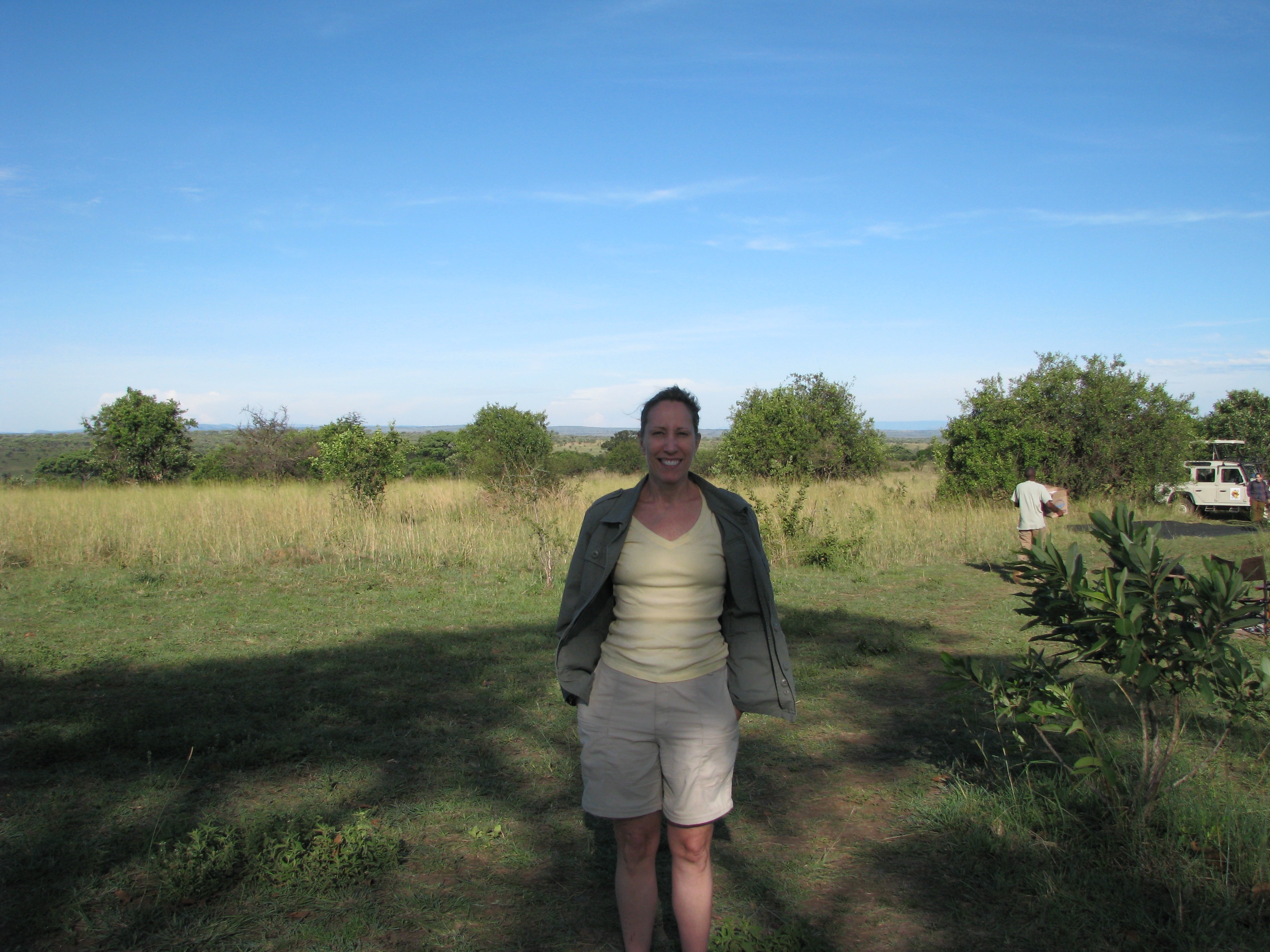
Me at our campsite on the Serengeti

Posted in 12-step spirituality, Christianity, Episcopal church, faith | Tagged , , , , , | 2 Comments

A loss for words

I have failed to meet my commitment to submit a new blog entry once each week.  This is not something I have enforced rigidly but I aim for consistency; 8 or 9 days may pass between entries but always on average I have posted weekly.

Not sure what is going on here, but I simply haven’t had anything to say.  There are multiple reasons for this, I suspect.  My friend Michael Ellis and I were talking this week about how difficult it is to engage in any kind of meaningful dialogue these days.  So much of anything of substance gets swept into this atmosphere of polarization.  We stop listening.  We stop being heard.  The constant debating, arguing and blaming makes my head hurt.  It makes my heart hurt.

I am told that some of the words I use are “political,” that I should choose politically neutral language (lest I not be heard).  The funny thing is, I don’t think of myself as political nor do I relish arguing – but, in this environment, none of us is exempt, it seems.

This is a time of discernment, of being open once again to what God is calling me to do.  Last week I was able to take some time off, to head north to see dear friends ordained and to visit some very creative ministries.  I was able to attend a morning meditation group at the Episcopal Cathedral in Boston.  Most of those present were homeless or recently housed folks, who worship on Sundays at Ecclesia – the outdoor church on Boston Common.  A very petite woman opened our time of silence with this simple prayer:

God, thank you for waking us up.
Waiting for you is very important.
Never forget that.
Amen.

For me this time of wordlessness is a time of waiting.  I am grateful for those who are willing to share themselves, to simply be companions on the journey.  God is at work doing a new thing.  I want to stay awake, to pay attention.  To listen and to be open to whatever that may be.

(Cropped photo of cross taken at Diocese of Florida offices).

Posted in 12-step spirituality, Christianity, faith, peace | Tagged , , , , , | 2 Comments

A mouthful of moon

Last week, as we celebrated the Feast of the Holy Name of Jesus, I began thinking about the importance of names – all names, not just the names we give to people.  One thing that came to mind was a wonderful interview of one of my favorite writers – Eudora Welty.  She spoke of the instant as a child when she became suddenly aware of the power and specificity of words.

She was gazing at the moon one evening and, as she relates in One Writer’s Beginnings, “the word ‘moon’ came to me as though fed to me out of a silver spoon.  Held in my mouth the moon became a word.  It had the roundness of a Concord grape Grandpa took off his vine and gave me.” Her wonder at the exactness of this word, representing this vast, mysterious and unreachable thing, would feed into her desire to read and eventually to write, creating entire worlds full of life and character.

Now, as we celebrate the Epiphany, a time of divine revelation, the significance of words continues to take on weight.  Though this is a season of recognizing or at least glimpsing the reality of God the Son, this word epiphany has been used in ways that diminish its power.  We sometimes call small realizations “epiphanies” (i.e. I had an epiphany that I should stop drinking caffeine or quit asking for affirmation from that individual who has consistently offered harsh, negative criticism or switch brands of cooking oil).  These new awarenesses are good things, but perhaps we should call them by another name.  At the very least, perhaps we can set aside epiphany for those new states of consciousness that are deeply life-changing and transformational, not just for ourselves but for our world.  Let’s save epiphany for those realizations that are so immense, so powerful that they take on a life of their own, that they act as a life-force that dynamically changes us, ushering us into a space marked by justice and love.  Ushering us into a world in which we act with greater justice and a truer, sacrificial love.

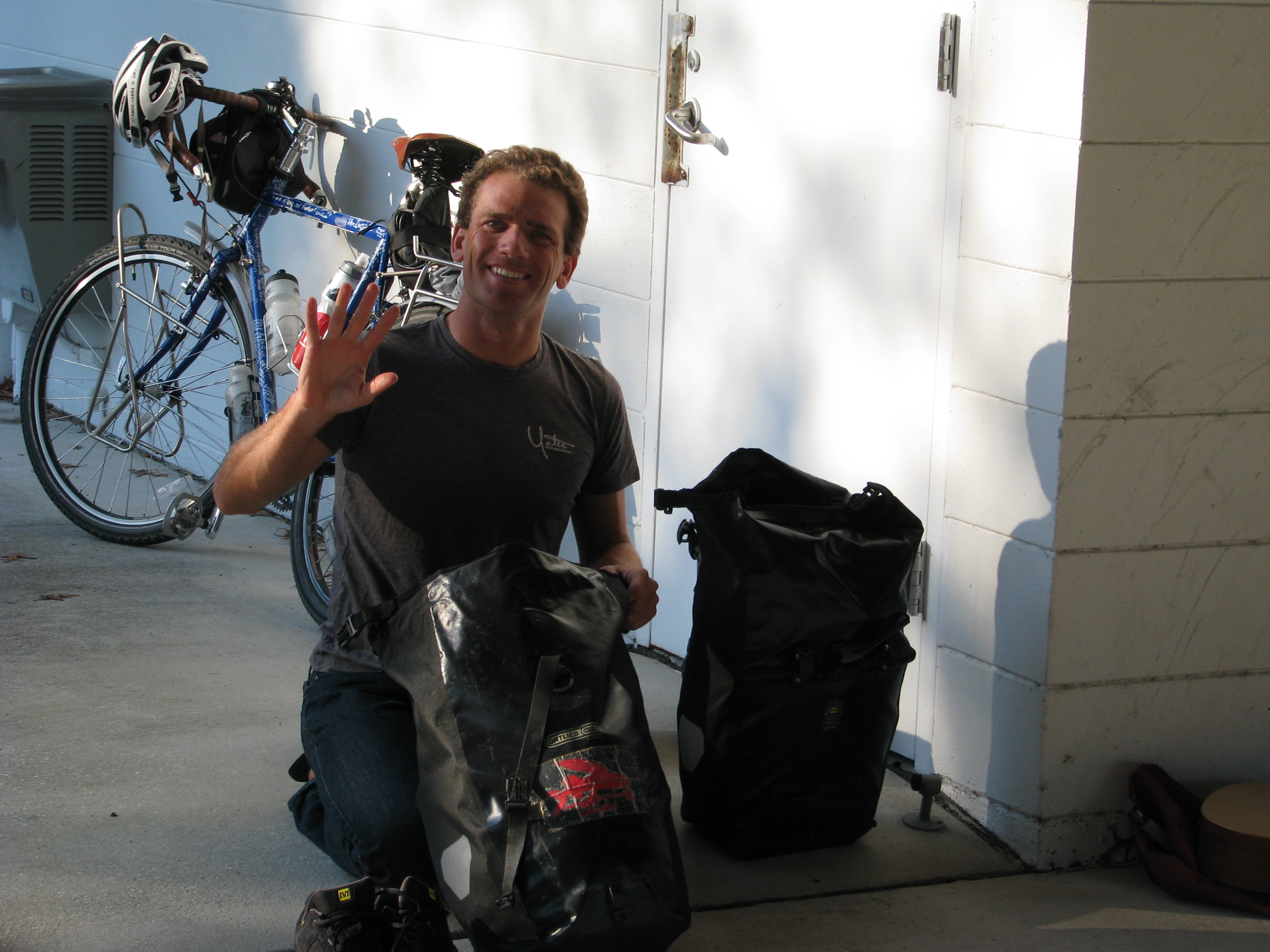
This week my friend Scott Claassen has been visiting with us here in Jacksonville, and, eager to have him come, I have been acting as his self-appointed “booking agent.” At times it is like pulling teeth, to get folks’ attention.  To get them to come and see this very special happening: a big-hearted vision on two wheels.  But when they do take a pause/rest/Sabbath to enter the conversation, for the most part they are nothing short of mesmerized.  At the very least they are intrigued.  This yearlong bike tour – this “Carbon Sabbath” – is a story that draws us in, that has a gravitational pull on our hearts and minds.  Scott shared that the inspiration for this pilgrimage came to him as a fully formed idea, divinely inspired.  In his Carbon Sabbath, Scott embodies a movement of dialogue that challenges and inspires, that calls us to think and act differently as a community.  His message is one of concern for the climate change that is unavoidable, that is an unmovable force already well underway.  We cannot change the cold hard facts of the science behind this.  But what we can shape and affect is how we will treat our neighbors as this change occurs, how we will care for each other and especially for those who are most deeply and harshly affected.

Is it fair to call Scott’s inspiration for a Carbon Sabbath an epiphany, his project a symbol of God with us? Possibly.  But this depends on how we respond.  If enough of us pay attention and remain conscious, if enough of us engage as a community, committed to taking care of our neighbors, meaning anyone who inhabits this planet, then yes, most definitely.  Epiphany it is.

(photos taken at St. Francis In-the-Field pavilion on Jan. 7, 2012)

Posted in Christianity, faith, peace | Tagged , , , , | 2 Comments

A hermeneutic of generosity

Some weeks ago, someone asked me: “Is Jesus really that concerned with the poor?”  This came not from a place of disdain for the poor but more from a place of personal angst.  If we are willing to sit with a question like this, to hold it and let it incubate and move in us, to notice our discomfort without moving to squelch or bury it, we will be changed.  If we enter into this process with integrity, without preconceived expectations, there is no telling where it will take us.

It is not unusual to equate times of inner peace and contentment as well as times of great joy with the proximity of God.  Often, in the absence of such peace, I have tried hard to return to that place of quiet, to experience what mystics refer to as the “consolations” of God.  Overtime, though, I have come to recognize the nearness of God in the disquiet, in the discomfort, in the unsettling questions.  In Mountains Beyond Mountains, a biographic portrayal of Partners In Health (PIH) founder Dr. Paul Farmer, Tracy Kidder speaks of the hermeneutics of generosity — or the shorthand “H of G” — for PIH lingo that involves interpreting the intentions, statements and actions of others in a positive, favorable light.  In this time of contentious political and religious banter and overly abundant, far-reaching reactive communication via “social” media and 24/7 news, we would be well served to employ a hermeneutic of generosity.

In his efforts to help curtail and prevent the spread of TB and other infectious diseases, Farmer recognizes the need for cooperation and a shared commitment that requires a willingness to let go of practices and treatments that have been trusted and sanctioned by established institutions and organizations, from national governments to the World Health Organization.  Farmer understands that this hermeneutic of generosity helps to open minds, doors and pocketbooks to a new way of practice.  While we strive to honor the call of Jesus in Matthew 25 in our individual lives, Farmer knows if we live into it communally, we’ll have much to celebrate.  “‘If I saved one patient in my whole life, that wouldn’t be too bad… (but) to have a chance to save a zillion of them, I dig that.’” (Mountains Beyond Mountains, p 187)

Jesus really is that concerned about the poor.  He is concerned about the orphan, the widow, the prisoner and the alien.  He is concerned about the sick.  He is concerned about every living thing.  He invites us to follow him in this.  Rather than making a list of New Year’s resolutions, I ask myself this: What is it that disturbs me? What unsettles me?  If I am willing to allow it to bubble up, to sit with it, even to name it, there I will find Jesus, loving his creation in me, longing to love it through me.

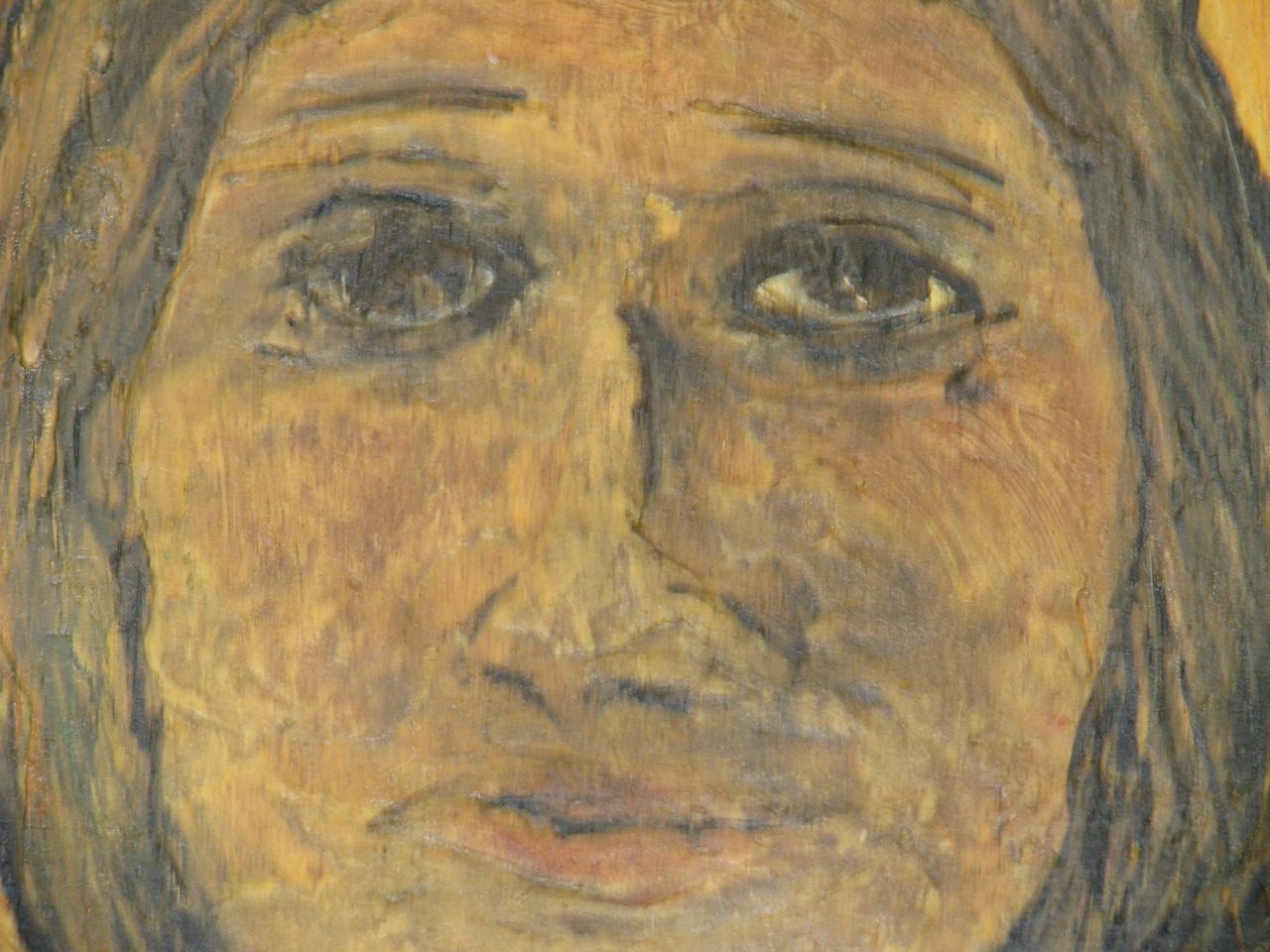
(Icon written in a workshop led by Teresa Harrison, June 2008)

Posted in faith, peace, St. Clare of Assisi, Uncategorized | Tagged , , , , , , | 6 Comments

The mind of the heart

In an essay on the nativity, Madeline L’Engle describes her struggle to accept a God who would be born of human flesh, a God who would “limit the limitless” in order to save all of creation.  She struggles with the story we tell and retell, year after year, and how to make sense of it within the context of our lives today.

On Christmas morning we will hear familiar, poetic words from the Gospel of John:

In the beginning was the Word, and the Word was with God, and the Word was God. He was in the beginning with God. All things came into being through him, and without him not one thing came into being. What has come into being in him was life, and the life was the light of all people. The light shines in the darkness, and the darkness did not overcome it.

There was a man sent from God, whose name was John. He came as a witness to testify to the light, so that all might believe through him. He himself was not the light, but he came to testify to the light. The true light, which enlightens everyone, was coming into the world.

One of the things I love most about this scripture is the way it shifts unapologetically from deeply mysterious poetry to straight narrative: There was a man sent from God, whose name was John.  The text alerts us that an unknowable, indefinable Something – something unlike anything in all of creation, is about to manifest in a new way in our world.

In The Irrational Season, Madeline L’Engle tells us the only way to begin to get a glimpse of this Something, the only way to begin to grasp it, is to use “the mind of the heart.”  To otherwise contain, define or capture it is to not know it at all.  This human tendency toward taming the unknowable results in our creating something small, something that has little to do with God and everything to do with our ego and our need to control.

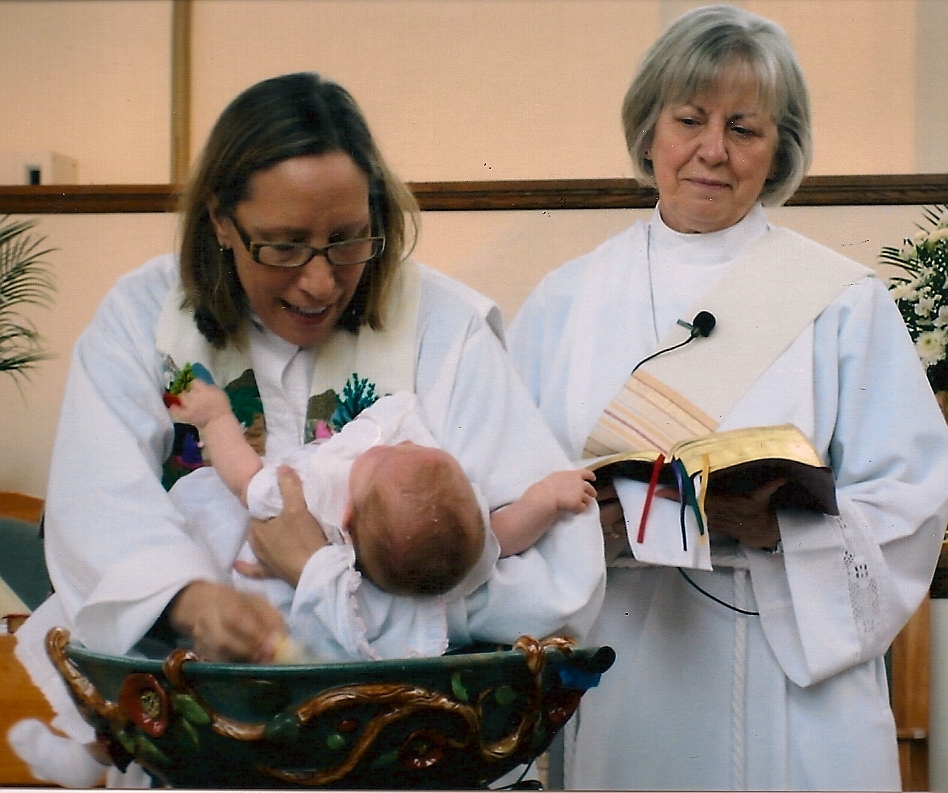
On Christmas morning at St. Francis, our worship will include a baptism.  Some would argue against the practice of baptizing infants.  And, yet, what better time can there be for a baptism?  Who better than an infant — whose mental capacities are not yet able to interfere with the mind of the heart — to receive the light of Christ?  And, so, we celebrate the birth of Christ, the Word who became flesh to live among us, full of grace and truth.

(Photo taken in October 2011 at St. Francis In-the-Field, with Deacon Linda Rosengren.)

Posted in Diocese of Florida, Episcopal church, faith, peace | Tagged , , , , , , , | Leave a comment

Overcoming the great divide

In Hope Against Darkness, Richard Rohr discusses and unfolds the theology of St. Francis of Assisi.  He speaks of the freedom found in coming to know that we are nothing.  And that God is everything.  He describes this as the thing that will “overcome the great divide” within ourselves and in the world, filling in that gap with a “place of spacious compassion.”

The move toward wholeness is a move toward awareness that all things are held together by God.  Nothing is left out.  No one is left out.  All of this is accomplished — is being accomplished — through the generous action of God.

In a recent adult education class, we were discussing this idea of our nothingness, our inability to save ourselves or “win God’s favor” through any merit of our own. God loves us simply because God is God.  Our job on this planet is to pay attention, to wake up! to this reality, as we are reminded during this Advent season.

As we discussed this idea of God’s vastness and the reality of our nothingness, one man posited this: ”It is as if, at some point, this very vast, powerful thing meets this very small powerless thing.”  What a beautiful description of Advent!  Mary likely would not put it exactly that way.  But we have a record of her response in Luke 1:

My soul magnifies the Lord,

And my spirit rejoices in God my Savior.


For He has regarded the low estate of His handmaiden,


For behold, henceforth all generations shall call me blessed.


For He who is mighty has done great things for me, and holy is His name.


(Photo taken with permission and appropriate remuneration at Masai village in Tanzania.)

Posted in 12-step spirituality, Episcopal church, faith, peace | Tagged , , , , , , , , | Leave a comment

Sweepings of wheat

Hear this, you that trample on the needy, and bring to ruin the poor of the land, saying, “When will the new moon be over so that we may sell grain; and the sabbath, so that we may offer wheat for sale? We will make the ephah small and the shekel great, and practice deceit with false balances, buying the poor for silver and the needy for a pair of sandals, and selling the sweepings of the wheat.” (Amos 8:4-10)

These words from the Daily Office should make us squirm.  Should cause us to pause and think about how we are living.  Justice and fairness are concepts we all support theoretically.  And yet, I’ll admit that when I am the one getting the “lucky break” during a time of need, I am not thinking about those who are overlooked or suffering.  I thank God for mercy and utter a sigh of relief.  It is hard to love my neighbor when I am afraid.

Amos tells us we are a community.  He reminds us that we cannot abuse, ignore or abandon parts of that community and expect long-term health and flourishing.  Spiritual death is well underway long before the more obvious signs of damage become apparent.

I can’t get out of my mind a CNN article that appeared on Nov. 29: As HIV Epidemic Grows, Florida City Grapples with Fear and Denial.  The article focuses on AIDS in my hometown Jacksonville, Florida.  Honestly, I didn’t know AIDS was such a grave threat here now; I can’t remember seeing anything about it amidst all the various causes for which there are fundraising walks and races most every weekend.   The article reports that HIV cases in Duval County (Jacksonville) have increased by more than 33% in the first half of 2011 and that most affected are low-income folks who are less likely to be tested or to receive early intervention.  According to the CDC, Jacksonville boasts the fifth highest rate of infection in the nation.  By all reports, the stigma has not lessened here — a grim reality that is not helpful.

Concurrent with this report, we have enjoyed lots of attention, concern and excitement around the sale of a professional football team – a team that plays in an arena surrounded by some of the most blighted, disadvantaged parts of our city.  To be fair, I personally know a number of Jaguar fans who do a great deal – day in and day out — for the disenfranchised in our community, including those in areas immediately around the arena.  But what if we were to do more?  What if we were to put a small fraction of the energy spent lobbying for this team, praying for touchdowns, and hoping for something to celebrate – what if a fraction of that energy were directed toward loving our neighbors, especially those shunned for a disease that in this day and age can be treated and managed well?

(photo taken at Trinity Episcopal Church, St. Augustine)

Posted in 12-step spirituality, Episcopal church, faith, peace | Tagged , , , , , | Leave a comment

Edge of heaven

This Sunday, we will encounter John the Baptist, the voice of one crying out in the wilderness, urging us to repent, to turn and be baptized.  What a sight this cousin of Jesus must have been, this young man from a fine, prominent family, standing in the river Jordan in nothing but animal skins, eating locusts and honey.  We are not told much of his story, but one thing is for certain: something very profound has happened to him.

Last night, I had the privilege of worshipping with a beautiful band of folks – each of whom has had his or her own unique, often-harrowing, experience of the profound.  In the stillness, we came together to pray, to wait and to reflect.  Each moment built on the one before it, as we prayed those prayers we have come to know through the liturgy of the church and through various 12-Step fellowships.  We share a common history of desperation (easy to identify with Isaiah’s prayer of desperation, “O that you would tear open the heavens and come down!”).  But we share also an experience of being salvaged for a life marked by hope, healing and self-forgetting love.

We have all found ourselves wandering in the wilderness at one time or another.  Many of us know what it is to live on the edge, whether by choice or not.  We have learned that if we are willing to take stock of our lives, if we are brave enough to ask for help, we can muster the courage to look beyond the edge.  If we do, we will find what the psalmist tells us:  that “mercy and truth have met together.”

Last night, during the prayers of the people, I heard the voices of friends and acquaintances, some of whom I’ve heard tens and even hundreds of times before in recovery-related activities.  Hearing those voices resonate in the rafters of that beautiful sanctuary was for me nothing short of an experience of heaven — a promise of things to come.

(Photo taken by Nico Britton, Berkeley Divinity School pilgrimage to Canterbury, 2011)

Posted in 12-step spirituality, Diocese of Florida, Episcopal church, faith, peace | Tagged , , , , , , , | Leave a comment

Anoint and cheer our soiled face

Strange words for a Thanksgiving morning, this sliver of a verse from the Veni Creator (Latin, Ninth Century, translated by John Cosin): Anoint and cheer our soiled face, With the abundance of thy grace.

At many dinner tables today – whether in well-appointed homes or at local feeding programs, many of us will be invited to give thanks for all the blessings of our lives.  Sometimes we give thanks for an abundance of good fortune in the form of “stuff” and accomplishments, but more often we speak of family and good friends.

Last Thanksgiving was spent with my dear friend Spencer and his family.  His mother has a wonderful tradition of passing around a large spoon.  We go around the table, each reflecting on some aspect of our life journey.  Last year we were thankful for friends and healed relationships, for our respective seminary journeys, and for the possibility for one at the table for asylum in the U.S. (which has since then been granted!).  It was a tender time with friends who, out of sheer necessity, have become practiced at being truth-tellers.  It was a time during which we gave thanks for good gifts in the context of understanding that each of us was blessed simply to be alive.  We each in our own way had walked through seasons of life marked by great uncertainty and peril. As we each held the spoon, we shared an appreciation for the fragility of life and a deep gratitude for the grace that is our only hope.

Today, many in our churches and communities will take time to feed and comfort those less fortunate.  Many in 12 step fellowships will not take the day off but, instead, will come together to give thanks for the precious gift of another day of life.  This is the gift:  the miracle of drawing breath, of being alive for another day, of hope.  Everything else is gravy.

Let us also give thanks for those who have helped us along the way and for those who give so freely of themselves:

Heavenly Father, whose blessed Son came not to be served

but to serve: Bless all who, following in his steps, give

themselves to the service of others; that with wisdom,

patience, and courage, they may minister in his Name to the

suffering, the friendless, and the needy- for the love of him

who laid down his life for us, your Son our Savior Jesus

Christ, who lives and reigns with you and the Holy Spirit,

one God, for ever and ever. Amen. (Book of Common Prayer, p 260)

(photo taken at Holy Cross monastery)

Posted in 12-step spirituality, Diocese of Florida, Episcopal church, faith, peace | Tagged , , , , , , | 2 Comments

A bit of goat

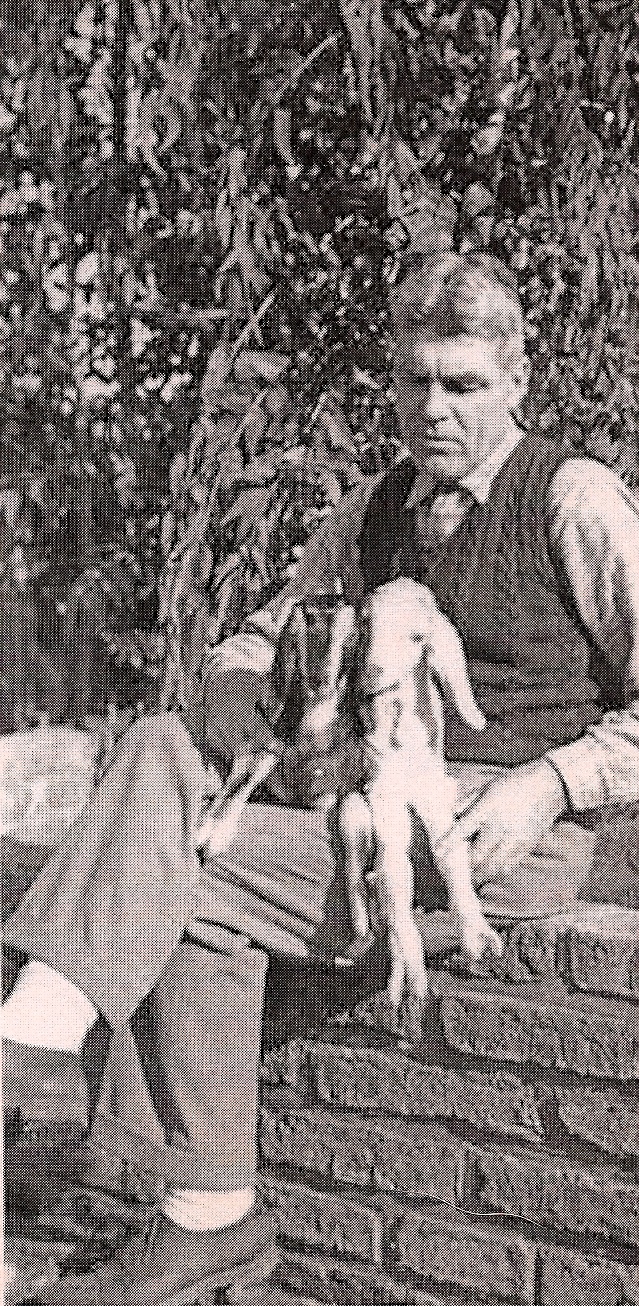
Pictured here is a photo of my great uncle Newman, taken many years ago at his farm near Santiago, Chile.  Newman developed quite a reputation as a leader in “the goat business.”  He was held in high esteem for developing techniques for producing goats that generate an unusually high quantity and quality of milk.  His were definitely not your average goats.

This Sunday we will ponder again Matthew 25:31-46 — Jesus’ teaching on the Last Judgment.  It is a familiar text – a text that makes most folks squirm, at least a little.  Jesus is referring to the “end times,” but we are meant to hold this text up against the canvas of our own times.  Are we sheep or goats?

Personally I can get confused about which is better.  In our culture of rugged individualism, being a “sheep” – a follower – is looked down upon.  But, in this text, it is the scrappy, pushy, willful goat that is set aside and will be destroyed.  This is a message of warning – a word that tells us to pay attention and to critique our actions.

I never had the opportunity to meet my great uncle, but I would bet a chunk of salary that he loved his goats.  Just look at the photo.  You can see his appreciation of these beasts – these creatures that, like it or not, are God’s ‘kids.’  Newman spent his life working with these animals, helping them to produce something of value that, in turn, helped to feed and nourish the community around them.

The good news is that, even on those days when we look in the mirror and see a goat looking back, God stands with us, loving us and waiting to transform us into something beautiful.  He stands ready to empower us to welcome the stranger, to feed the hungry and to clothe the naked. He gives us the willingness and strength to take care of the sick and to visit the prisoner.

On any given day, we will find that there is a bit of goat in even the best of us, and a bit of sheep in the worst of us.  We will find that Christ the King has followed us even into the most troublesome thicket.  He waits with open arms to lovingly embrace us, to set us free.

Posted in 12-step spirituality, Episcopal church, faith, peace, St. Clare of Assisi | Tagged , , , , , , | Leave a comment